
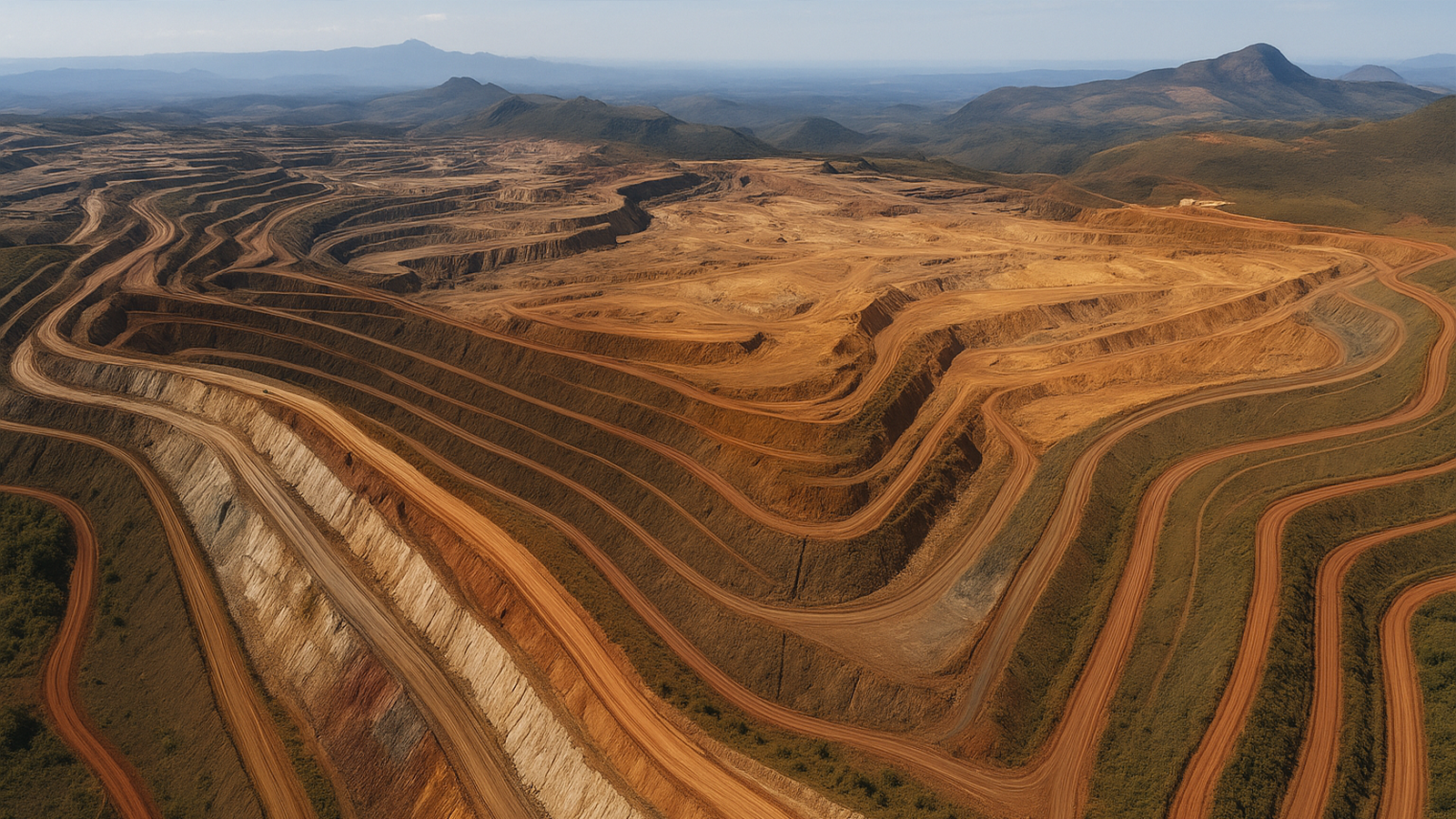
The influence of waste rock piles on the operational performance of mining companies

Waste rock piles play a crucial role in the financial results of a mining venture.
Definition of Sterile According to Standards and Literature
According to NBR 13.029, mine waste is any material removed during mining that has no economic value. Similarly, Hartman and Mutmansky (2002) define waste as the material that accompanies the ore and needs to be removed to enable access to the ore, and then disposed of in a controlled manner.
Strategic Importance of Waste Disposal
Therefore, waste rock disposal throughout the mine's lifecycle is a strategic and high-impact operation. Besides representing one of the largest operating costs, how waste rock is managed directly influences the project's economic viability. The waste-to-ore ratio (REM) defines the minimum economically viable grade, directly affecting mineable tonnage, production scale, CAPEX, OPEX, cut-off grade, Net Present Value (NPV), rate of return on investment, and payback period, as noted by dos Santos (2011).
Factors Influencing the Quantity and Disposition of Waste
Several factors influence the amount of waste rock to be removed from a pit, impacting the selection of the area for its disposal. Selecting a waste rock pile (WRP) site involves analyzing land availability, physical constraints, environmental impacts, and socioeconomic and political considerations.
Geotechnical Criteria and Detailed Design
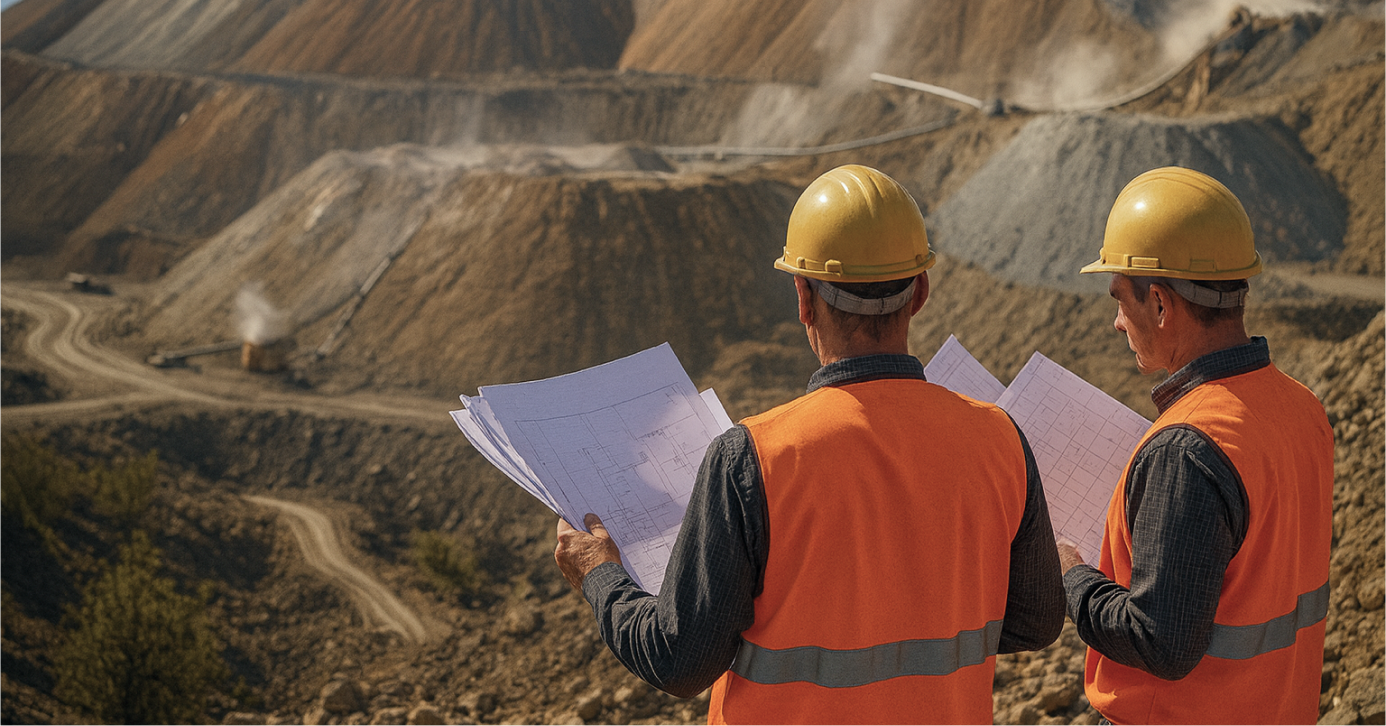
Once the site is defined, geotechnical criteria become essential to ensure the pile's stability and safety over time, avoiding technical problems and economic losses. Developing the detailed design of the PDE requires a sequence of geotechnical studies that gradually increase understanding of the ground conditions (Figure 1).
Field Research
Laboratory Tests
Stability Studies
Detailed Geotechnical Design
Risk Letter
Development of the disposal methodology
Mappings
Physical properties
Parameter analysis
Bench and global slopes to be adopted
Polls
Chemical properties
Study of alternatives
Berm width
Trenches
Resistance
Foundation treatment
In situ testing
Compression
Surface drainage structures
Sampling
Densification
Internal drainage structures
Vegetable coating
Characteristics of Waste Pile Materials and Foundations
Waste rock piles are composed of heterogeneous materials from different lithologies and present a wide range of grain sizes, from large blocks to fine soils. The foundations can also vary, from firm ground to soft soils with low bearing capacity.
Geotechnical Risks and Control Practices
Waste rock disposal poses significant geotechnical risks to the safety of people, equipment, and structures. Therefore, the mining industry has adopted control and mitigation practices, such as:
- Definition of safe zones for truck tipping;
- Spreading material with crawler tractors;
- Construction of drains to minimize the effects of water on the piles.
Environmental Impacts and Future Land Use
In addition to safety, it is essential to consider the environmental impacts and future land use in areas occupied by PDEs. These structures can reach large proportions, and in some cases, they are the largest constructed by mining activities.
Essential Aspects for a Successful Project
Therefore, a successful waste dump project must consider, from the outset:
- The characteristics of the foundation;
- Hydrological and hydrogeological aspects;
- The stability of the slopes;
- Erosion control measures.
This approach allows us to mitigate geotechnical risks, reduce operating costs and ensure safety and sustainability for operations.
In the VinQWe believe that smart technical decisions begin with a systemic, long-term perspective. Therefore, we are committed to offering comprehensive solutions and robust techniques to ensure your operation is solid in the present and secure for the future.
Authors:

John Paul dos Santos
Bachelor in Mining Engineering (UFMG), Master in Civil Engineering and Management (University of Glasgow), Specialist in Geotechnical Engineering and Project Management.
Mining Engineer specializing in geotechnics and project management, an international reference in dams and geotechnical structures applied to mining.

Leandro Azevedo da Silva
Bachelor in Geology (UFRRJ), Master in Mining Engineering (UFMG) and Specialist in Mineral Resources Engineering.
A geologist with nearly 20 years of experience in geotechnics, he leads technical projects at VINQ, combining innovation and safety in mining solutions.

 English
  Português do Brasil