
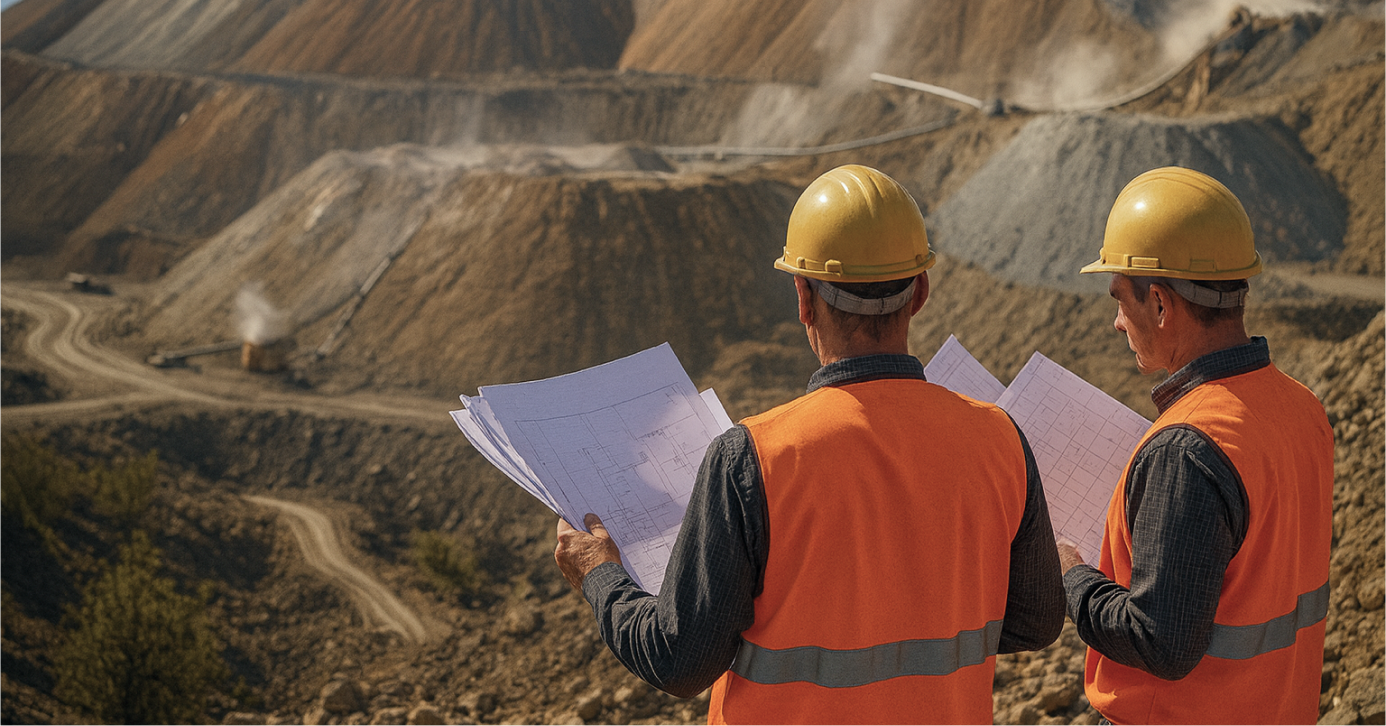
Closure of TSFs with Filtered Piles, Dry Covers and Erosion Control: Literature Trends and Design Challenges

The new frontier of TSF closures
The closure of tailings disposal facilities has ceased to be a "end-of-life project" issue and has become a central theme in long-term risk architecture. What was once treated as a final stage of earthworks, soil cover, and minimal revegetation is now analyzed as an integrated system of geotechnical, hydrological, geochemical, and ecological performance over decades or centuries.
This repositioning is driven by three main vectors. The first is the tightening of expectations from investors, insurers, and society regarding the prevention of dam and tailings dam failures. The second is the consolidation of global norms and standards, such as GISTM and national dam safety codes, which explicitly define post-closure responsibilities and the need to demonstrate performance throughout the life cycle. The third is the increasingly clear perception that the total cost of a poorly conceived closure, in terms of remediation, litigation, and loss of social license, far outweighs any CAPEX savings obtained through short-term decisions.
In this context, filtered tailings piles, high-performance dry cover systems, and geomorphic design cease to be "pieces of a solution" and become components of a single engineering problem: how to achieve a stable, drained final condition with acceptable residual risk and maintenance needs compatible with the financial and institutional reality of the developer.
Filtered tailings piles as the core of the closure strategy.
Filtered tailings are often presented as a key element in the transition from saturated tailings dams to drained systems with lower liquefaction potential. Conceptually, stacking high-solids tailings, compacted in controlled layers, reduces the reliance on large containment dams and decreases vulnerability to extreme hydrodynamic triggers.
Recent practice, however, shows that the performance of filtered piles is conditioned by factors more subtle than just the moisture content at the plant's output. Several points warrant further investigation.
First, the behavior under partially saturated conditions. The shear strength of filtered piles depends not only on the traditional effective stress, but also on the matric suction, which is a function of the moisture content and the characteristic retention curve of the material. Cycles of intense rainfall, rising groundwater levels in the foundation, poor internal drainage, and shading or surface compaction can cause loss of suction, pore pressure migration, and a significant reduction in safety factors, especially on edge slopes and interfaces with thalwegs and natural slopes.
Secondly, the internal drainage architecture. The method of discharge, the degree of granulometric segregation, the presence or absence of horizontal and vertical drains, the treatment of the base and abutments—all of this controls how the water entering the system finds its way out. Filtered piles designed as “dry deposits” without a clear drainage strategy tend to develop localized saturation zones, differential settlements, and surface displacements that complicate closure, increase the need for geometric reconfiguration, and raise residual risk.
Third, the compatibility between operational geometry and closure geometry. Many assets are still stacked with an exclusive focus on operational efficiency, leaving the geometric problem of closure until the end of their useful life. The result is the need for large volumes of tailings rehandling, aggressive cuts, and corrective fills to transform an operational stockpile into a terrain suitable for receiving covers, surface drainage, and functional revegetation. More mature projects define final geometry envelopes early on, so that the stockpile progresses towards the desired closure shape, reducing critical interfaces and the effort of movement at the end of life.
Finally, it is necessary to recognize the role of filtered piles as a platform for the closure system. They are not the closure itself, but the "geotechnical substrate" upon which covers, channels, erosion control structures, and revegetation systems are built. If the pile does not have predictable behavior, robust drainage, and deformations compatible with the overlying layers, any cover or geomorphological solution tends to operate in a state of permanent emergency.
Dry roofs as multi-functional systems
In the contemporary approach, dry cover crops are no longer specified in terms of "minimum thickness soil layer" but are modeled as multi-functional systems, with explicit objectives in at least four dimensions: the hydrological dimension, the geochemical dimension, the mechanical dimension, and the ecological dimension.
From a hydrological point of view, high-performance roof coverings are designed to actively manage the water balance. In semi-arid regions, the objective is often to capture, store, and return as much rainwater as possible to the atmosphere through evapotranspiration, minimizing percolation into the tailings. In humid regions, the focus is more strongly on promoting safe surface runoff and reducing water residence time in the roof zone, avoiding prolonged saturation and loss of resistance in critical horizons. In both cases, the design ceases to be empirical and begins to rely on unsaturated flow modeling and water balance based on historical series and future climate scenarios.
In the geochemical area, covers over sulfidic tailings or those potentially generating acid or metalliferous drainage assume the additional function of limiting the flow of oxygen and water that reaches the reactive fronts. This can be done through layers of low air permeability, combinations of fine and organic materials, permanent or near-permanent saturation zones, and the use of reactive materials for partial neutralization. The choice of architecture depends on the balance between the intensity of the potential for acid drainage generation, the availability of materials, the desired robustness, and the monitoring horizon that the developer is willing to undertake.
From a mechanical perspective, soil covers need to withstand differential settlement, slow pile movements, and volumetric wetting and drying cycles. Very rigid materials, poorly detailed interfaces, and solutions with a strong reliance on thin and fragile structures tend to crack, create preferential infiltration pathways, and initiate erosive processes that are difficult to reverse. In filtered piles, this challenge is amplified, as residual deformations and load redistributions over time are more common, especially in foundations with significant geotechnical heterogeneities.
Finally, there is the ecological dimension. The cover crop needs to be compatible with the development of a plant community that fulfills functions of stabilization, interception of raindrops, increase in surface roughness and, in many cases, progressive soil building. This implies not only providing a minimally fertile growing layer, but also defining substrate preparation standards, species selection, planting density, initial irrigation needs and adaptive management strategies over time.
In summary, the cover ceases to be an "accessory" to the enclosure and becomes a hydrological and geochemical control infrastructure that needs to be designed in close connection with the behavior of the filtered pile, the expected erosion regime, and the objectives for future use of the area.
Erosion control and geomorphic design of the final landscape.
The accumulated experience in closure projects shows that erosion is, in practice, the great stress test of the proposed solutions. Regular slopes, with high gradients, extensive ramp lengths, and rigid berms, tend to develop significant erosive processes over the years. These features can evolve from shallow gullies to deep ravines, exposing tailings, degrading the cover, and compromising channels and drainage structures.
To address this reality, the logic of geomorphic landscape design is gaining ground. Instead of designing individual slopes, the closure is now conceived at the scale of the watershed, with slopes, divides, saddles, and channels configured to behave similarly to natural reference systems. The final geometry seeks to reduce the specific energy of the runoff, distribute the flow along multiple paths, and promote deposition points where the sediment input is compatible with the transport capacity of the watercourses.
This type of solution is based on three main elements. The first is the redefinition of slope geometries, with lower gradients, smooth transitions, well-positioned convergence areas, and the judicious use of terraces and steps, not as isolated elements, but as parts of an integrated form. The second is the use of erosion and landform evolution models, which allow simulating the behavior of the landscape over decades in the face of rainfall and climate change scenarios, comparing alternatives in terms of accumulated erosion rates, risk of tailings exposure, and the need for corrective interventions. The third is the integration between these planned geometries and the logistics of material handling, so that the construction of the final relief is compatible with the volumes, equipment, and execution windows available.
In the case of filtered stockpiles, there is an additional opportunity. As stockpiling occurs over several years, it is possible to direct the launching fronts and advance rates in order to progressively approximate the stockpile to the desired final geomorphology. This reduces extreme changes during the closure phase, limits interfaces between old deposits and new fills, decreases the need for deep cuts, and minimizes rework on already stabilized areas.
The success criterion in this context is no longer just the verification of overall stability under current conditions, but also includes metrics for projected erosion, reliability of drainage structures, probability of tailings exposure, and predictability of maintenance costs.
Revegetation, ecohydrology and long-term performance
In recent projects, revegetation is conceived as an integral part of the closure system, and not as an aesthetic step or a formal fulfillment of restoration requirements. The vegetation component acts directly in modulating the water balance, in surface protection against erosion, in the stabilization of fine soils, and in the evolution of soil quality over the years.
From an ecohydrological point of view, vegetation interferes with the system in at least three ways. It intercepts rainfall, reducing the direct impact of raindrops on the soil and mitigating the... splashIn evapotranspiration, returning a significant fraction of the water stored in the root zone to the atmosphere. And in improving soil structure, through the formation of aggregates, the incorporation of organic matter, and the creation of biogenic porosity. These combined processes tend to reduce sheet erosion, decrease deep percolation in some contexts, and increase resilience to intense rainfall events.
At the same time, the compatibility between vegetation and the geochemistry of the tailings and the cover is a point of attention. In environments with acid drainage or the presence of metals in solution, the root system and biomass can act as vectors for the accumulation and redistribution of potentially toxic elements. This often requires growing layers with more controlled chemical and physical quality, the use of soil amendments and conditioners, the selection of tolerant species, and planning for monitoring the vegetation and environmental quality of adjacent areas.
A third aspect is resilience to disturbances. Forest fires, prolonged droughts, pests, and extreme events can drastically reduce vegetation cover within certain timeframes. Well-designed canopies and geometries need to be able to maintain a minimum acceptable performance even under scenarios of temporary vegetation loss, preventing the structure from entering a state of accelerated degradation after a single adverse event. In parallel, management plans should include strategies for species reintroduction and recovery of affected areas, with a planning horizon consistent with the useful life of the existing structure.
Finally, a more mature vision incorporates ecological and hydrological performance indicators into the monitoring plan. Instead of simply checking "if it's green," metrics such as effective vegetation cover by species class, root density at different depths, volumetric moisture along the cover profile, erosion rates in monitoring plots, and water quality at outlet points are monitored. These indicators, associated with corrective action triggers, allow the closure system to operate adaptively, adjusting management practices as the landscape evolves.
Key challenges in integrating filtration, cover, and erosion.
When seeking to integrate filtered piles, dry covers, revegetation, and geomorphic design into a single enclosure concept, certain challenges arise repeatedly and require explicit engineering and management decisions.
The first challenge is the coupling between geotechnical, hydrological, and geochemical dimensions. The evolution of pore pressures and suctions over time depends on the interaction between infiltration, internal drainage, and the behavior of the overburden. The flow regime, in turn, conditions geochemical reactions within the pile, which can alter the chemistry of the percolated water, the cementation of contacts, and even the pore structure of the material, with potential impacts on hydraulic conductivity and resistance. Sectoral models, in which each discipline works with simplified and poorly connected assumptions, tend to produce solutions that deteriorate unexpectedly when exposed to real operating conditions over decades.
The second challenge is the mismatch between project horizons and risk horizons. Engineering typically works with windows of twenty to thirty years, whether due to limitations in climate and market data, or due to corporate planning horizons. However, the risk associated with tailings with the potential to generate acid drainage or residual instability can remain active for much longer periods. This asymmetry forces the entrepreneur to make clear choices between solutions with a natural tendency towards a state of geomorphic and geochemical equilibrium, which require greater initial investment, and solutions that presuppose continuous and long-term maintenance.
The third challenge lies in climate uncertainty. Changes in precipitation patterns, the frequency of extreme events, and the seasonal distribution of rainfall can shift the hydrological load regime over the TSF (Transfer of the Sea). Closure solutions based on parameters calibrated exclusively on historical series, without sensitivity analysis to future scenarios, tend to underestimate the probability of unforeseen saturation episodes, concentrated erosion, and failures of surface structures.
A fourth challenge is the recurring conflict between reducing closure CAPEX and total lifecycle cost. Steeper geometries, thinner roofs, less redundant drainage systems, and simplified surface treatments seem attractive in feasibility studies focused solely on initial investment. When maintenance scenarios, emergency reinforcements, corrective interventions, and potential reputational and legal costs arising from performance failures are incorporated, the logic is reversed. Projects that internalize this calculation tend to favor solutions that are more "boring" from a CAPEX perspective, but more predictable and cheaper in terms of total lifecycle cost.
Finally, there is a governance challenge. Structures such as GISTM and national legislation have been demanding explicit governance of closure and post-closure, with defined responsibilities, a dedicated budget, periodic review processes, and transparency with stakeholders. In practice, this means treating closure as a long-term program with an owner, goals, indicators, and continuous improvement cycles, and not as a package of works to be "delivered" in the final phase of operation.
Implications for operators and the role of a lifecycle consultancy.
For operators evaluating the combination of filtered piles, dry covers, and geomorphic design in the closure of landfills, the main implication is straightforward. It is no longer technically defensible to treat piling, internal drainage, covers, erosion control, and revegetation as separate projects, conducted at different times by disconnected teams.
A consistent approach, in practice, implies some structuring choices. Designing filtered tailings piles with geometry, drainage, and interfaces compatible with the future closure relief. Sizing tailings covers based on unsaturated flow models and geochemical criteria, explicitly stating hypotheses about climate, hydraulic load, and the reactive potential of the tailings. Using erosion and landform evolution modeling tools to compare geometry alternatives and surface drainage strategies. Integrating revegetation into the ecohydrological design of the system, with species and arrangements compatible with the water regime, the substrate, and biodiversity goals. Structuring performance monitoring plans with clear indicators, linked to corrective action triggers and a maintenance budget compatible with the long-term reality of the asset.
In this scenario, the role of a specialized consultancy with a lifecycle perspective is not just to provide specific calculations or detailed designs. It is to build, together with the operator, an integrated closure framework that connects engineering decisions to risk, governance, and investment decisions. In other words, it is to move away from the logic of "delivering a closure project" and towards the logic of "designing a performance system" that is technically sound, financially predictable, and socially defensible over time.
Authors:

John Paul dos Santos
Bachelor in Mining Engineering (UFMG), Master in Civil Engineering and Management (University of Glasgow), Specialist in Geotechnical Engineering and Project Management.
Mining Engineer specializing in geotechnics and project management, an international reference in dams and geotechnical structures applied to mining.

Leandro Azevedo da Silva
Bachelor in Geology (UFRRJ), Master in Mining Engineering (UFMG) and Specialist in Mineral Resources Engineering.
A geologist with nearly 20 years of experience in geotechnics, he leads technical projects at VINQ, combining innovation and safety in mining solutions.
 English
  Português do Brasil