


THE dam safety in Brazil has undergone important transformations in recent decades. What was previously guided only by structural and dimensional criteria, today incorporates integrated approaches to risk, potential harm and technical governance. This evolution reflects the maturation of national legislation and the lessons learned from tragedies that have affected the sector.
Absence of Unified Legislation
Until the end of the 1990s, Brazil did not have a specific legal framework for dam safety. Management was decentralized between sectors such as energy, mining and irrigation, each with its own internal regulations, creating gaps in the assessment of risks and responsibilities.
First Normative Inflection: CONAMA Resolution No. 237/1997
Resolution No. 237 introduced the environmental licensing for projects with potential impact, including dams. Although relevant, it did not yet directly address structural safety or accident prevention.
Regulatory Framework
Law No. 12,334/2010 – National Dam Safety Policy (PNSB)
Published in 2010, the Law No. 12,334 established a unified national system. Its main advances include:
- Creation of Dam Safety Plan (PSB) as a legal requirement;
- Institution of the National Registry of Dams;
- Introduction of the concepts of Risk Category (CRI) and Potential Associated Damage (PAD);
- Periodic inspection by sectoral bodies.
Challenge: Despite the progress, there were practical obstacles, such as the lack of resources for regulatory bodies and the absence of stricter sanctions.
Reinforcement of the PNSB
Law No. 14,066/2020
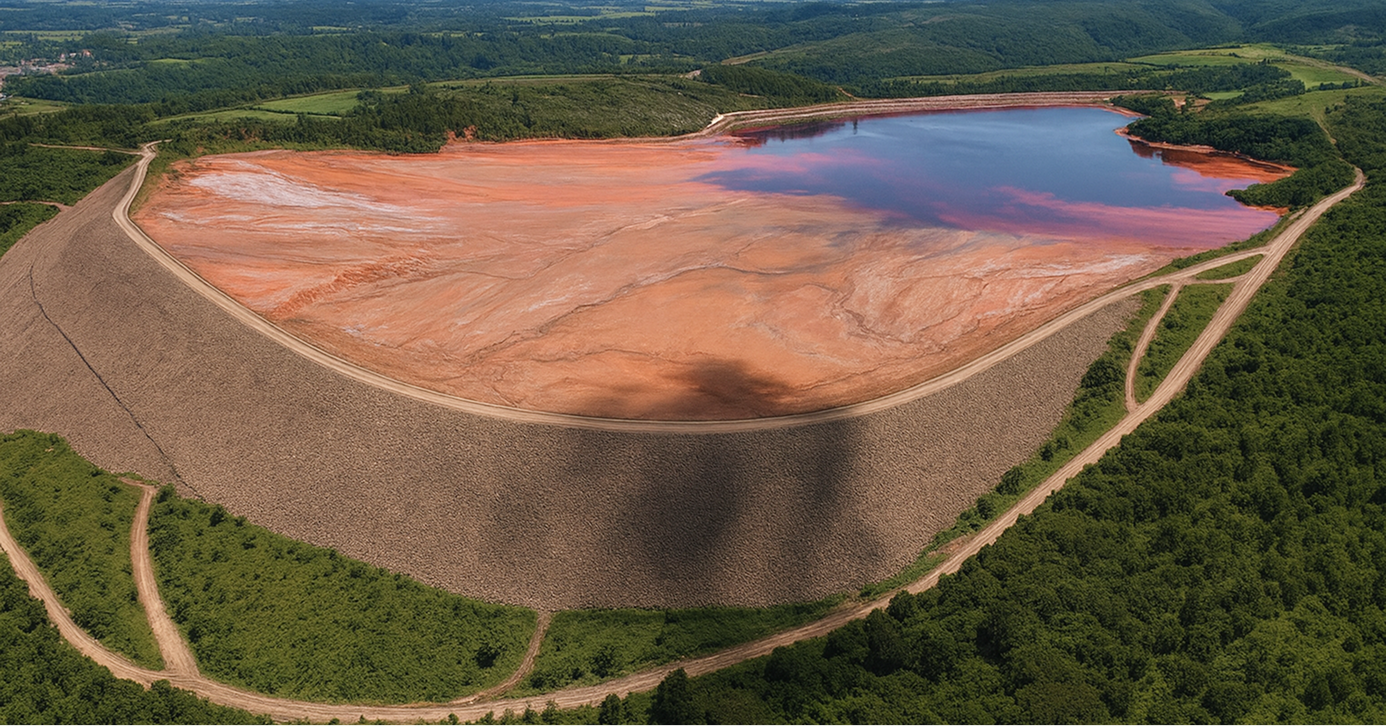
Approved after the accidents at tailings dams, this law made the legal framework more robust, with measures such as:
- Ban on upstream dams (mining);
- Mandatory Hypothetical Rupture Studies (HRS) in dams with high DPA;
- Increase in transparency and risk communication;
- More severe penalties in case of non-compliance;
- Civil, criminal and administrative liability more rigorous.
Technical Evolution: From Structure to Risk
The classification of dams now considers three pillars:
- Reservoir height and volume – Defines the legal framework of the structure;
- Risk Category (CRI) – Evaluates design, conservation, operation and documentation;
- Potential Associated Damage (PAD) – Measures human, environmental and economic impacts in the event of a failure.
Risk Management Tools
- EAP (Emergency Action Plan)
- Flood Maps and Self-Rescue Zones (ZAS)
- Automated and real-time monitoring
- Hydraulic and geotechnical simulations
Brazil began to adopt tools such as Bow-Tie, FMEA and fault trees, aligned with the preventive management and operational safety culture.
International Comparison: Global Convergence, Local Approaches
Country/Region
Main Criteria
Classification Levels
Relevant Observations
Brazil
CRI + DPA, height and volume
High, Medium, Low
Legal and social focus; governed by Laws No. 12,334/2010 and 14,066/2020
USA
Consequences of failure
High, Significant, Low
Based on FEMA and USACE; focus on human and economic losses
Canada
Consequence + probability
Very High, High, Moderate, Low
CDA Matrix Approach: Risk vs. Consequence
Australia
Consequences of failure
Extreme, High A/B, Significant, Low
ANCOLD: critical scenario analysis
South Africa
Potential risk + structural condition
Category I, II, III
Emphasis on integrated risk management
European Union
Potential impact + local standards
Category A, B, C
Variable application between countries according to Directive 2007/60/EC
Global Trends in Dam Safety
- Centrality in potential harm (focus on human lives and environmental impacts);
- Risk analysis as a decision-making tool (Bow-Tie, FMEA, modeling);
- Transparency and social participation in regulatory processes;
- Continuous monitoring and real-time data as an emerging pattern.
Key Differences:
- Brazil uses a double rating (CRI + DPA).
- US and Canada prioritize consequences of failure, with qualitative and quantitative analyses.
- In the European Union, standardization varies between member countries.
Current Challenges in Brazil
Despite progress, obstacles remain:
- Operational limitations of supervisory bodies;
- Lack of data integration between federal and state spheres;
- Low engagement of surrounding communities;
- New climate and cyber threats need to be incorporated into risk analysis.
VinQ's Commitment to Safety and the Future
In the VinQ, we understand that Classifying and monitoring dams goes beyond legal compliance. It is a mission of responsibility towards society and future generations.
We offer:
- Rupture studies with high-precision simulations
- Analysis based on ISO 31000 Risk Management
- Decharacterization and technical regularization plans
- Integrated security management with a focus on ESG and technical governance
 English
  Português do Brasil