
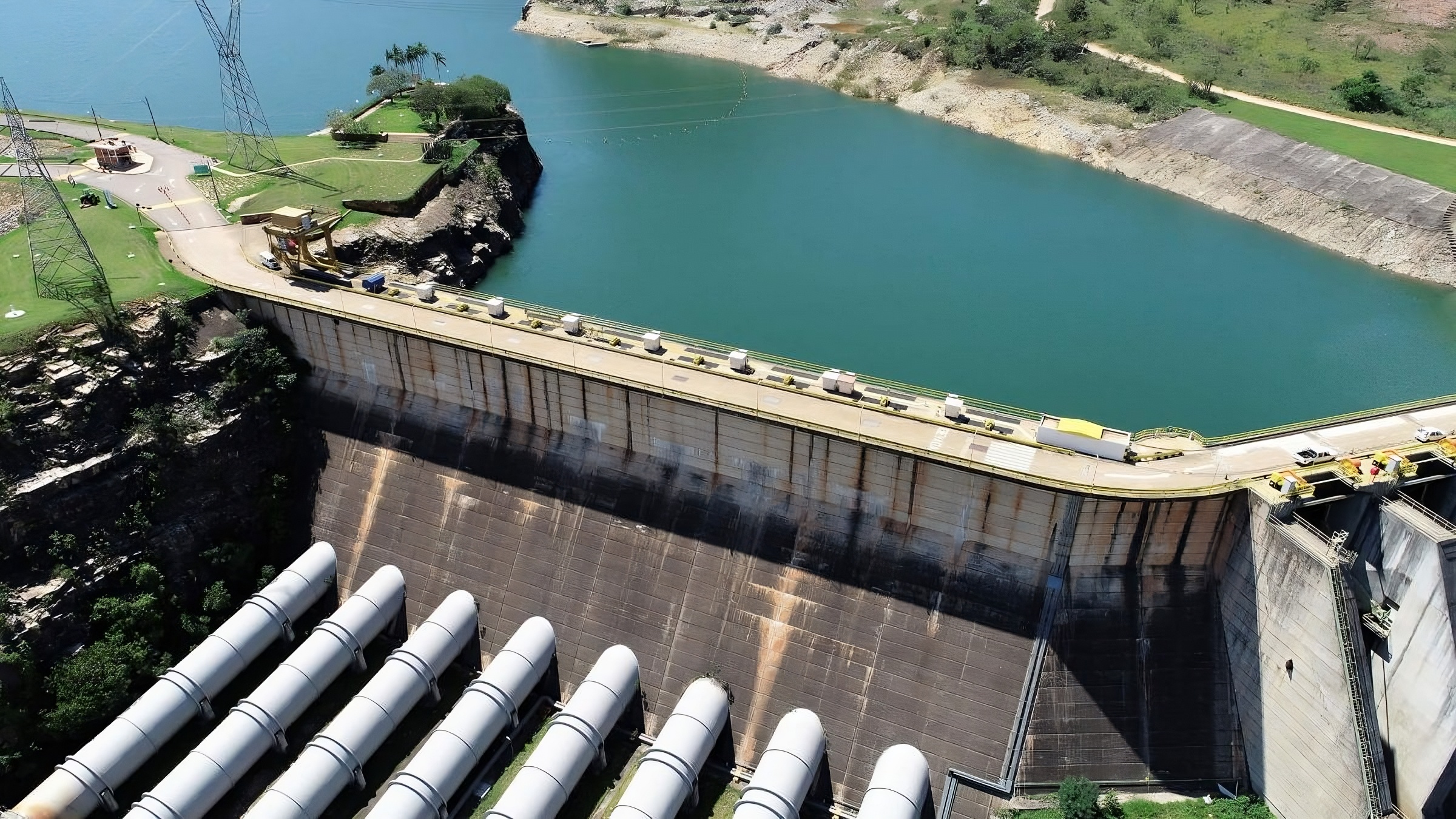
Fundamentals, structure and technical approaches of dam classification systems in the world

THE dam classification is an essential step to ensure the safety of structures, prioritize resources and guide strategies risk management. Although there are common principles, each country or region adopts its own criteria, terminology and levels of demand.
Below, we present a comparative overview of the main dam classification systems around the world, highlighting similarities, particularities and implications for geotechnical engineering.
Brazil: CRI + DPA System (Law No. 12,334/2010 and Law No. 14,066/2020)
The Brazilian model is structured around two main axes:
- Risk Category (CRI): assesses the probability of failure based on:
- State of conservation;
- Project complexity;
- History of anomalies;
- Technical documentation;
- Existence of Dam Safety Plan (PSB).
- State of conservation;
- Potential Associated Damage (DPA): considers the consequences of the rupture, such as:
- Potential loss of life;
- Environmental damage;
- Socioeconomic and infrastructure impacts.
- Potential loss of life;
Levels: High, Medium and Low, both for CRI and DPA.
Dams with high DPA require Emergency Action Plan (EAP) and rupture modeling.
United States: Hazard Potential Classification (FEMA / USACE / FERC)
In the US, the classification is based on only in the consequences of failure, without considering the probability.
- High Hazard: Risk of deaths and major losses.
- Significant Hazard: Non-life-threatening economic or environmental impacts.
- Low Hazard: Local damage with low impact.
Strong emphasis on flood zones, mappings and contingency plans.
Canada: Canadian Dam Association (CDA) Guidelines
System structured in a matrix that crosses:
- Consequences of failure (lives, environment, essential services);
- Probability of failure, especially for large projects.
Classifications:
- Very High: Multiple fatalities likely and major losses.
- High: Possible fatalities.
- Moderate: Material damage without deaths.
- Low: Localized impact.
It is recommended to use quantitative risk analysis.
Australia: ANCOLD Guidelines
Australia follows a model based on consequences of failure, without direct probabilistic analysis.
Classifications:
- Extreme: Mass fatalities expected.
- High A / High B: Probable or possible fatalities.
- Significant: Economic impact, no risk to life.
- Low: Restricted and light damage.
Uses approach precautionary and recommends public transparency in high-risk cases.
South Africa: Department of Water and Sanitation
The South African system combines:
- Potential risk;
- Structural condition of the dam.
Categories:
- Category I: Highly dangerous and life-threatening.
- Category II: Significant damage, but no fatalities expected.
- Category III: Minimal impacts.
Dams of the Category I must have mandatory monitoring and emergency plans.
European Union: Directive 2007/60/EC and National Standards
In Europe, the classification follows general guidelines of Floods Directive 2007/60/EC, but each country applies its own rules.
Typical classifications:
- Category A: High risk (death or major damage).
- Category B: Medium risk (relevant damage).
- Category C: Low risk (local impact).
Countries such as Germany, France and Spain adopt criteria such as volume, height and history of the dam.
Global Trends in Dam Classification
Despite the variations, there is convergence around some practices:
- Assessment of consequences as the main criterion
- Integration of risk analysis tools (quantitative and qualitative)
- Requirement for transparency and social participation
- Continuous monitoring and integrated security management
Implications for Geotechnical Engineering
The diversity of approaches reinforces the importance of professionals with international training and multidisciplinary vision, capable of interpreting and applying different models according to the technical and regulatory context.
In the VinQ, we are aligned with the main global guidelines to offer:
- Customized technical solutions;
- Proper classification of structures based on risk and impact;
Security projects integrated with sustainability and governance.
VinQ Geotechnics: Connecting Technical Knowledge to International Best Practices
- Knowing international systems is part of our commitment to excellence, technical responsibility and safety.
VinQ. Engineering with purpose. Solutions that transcend time.
 English
  Português do Brasil