

Emergency Action Plans (EAPs) applied to dams: Risk governance, international practices and lessons learned

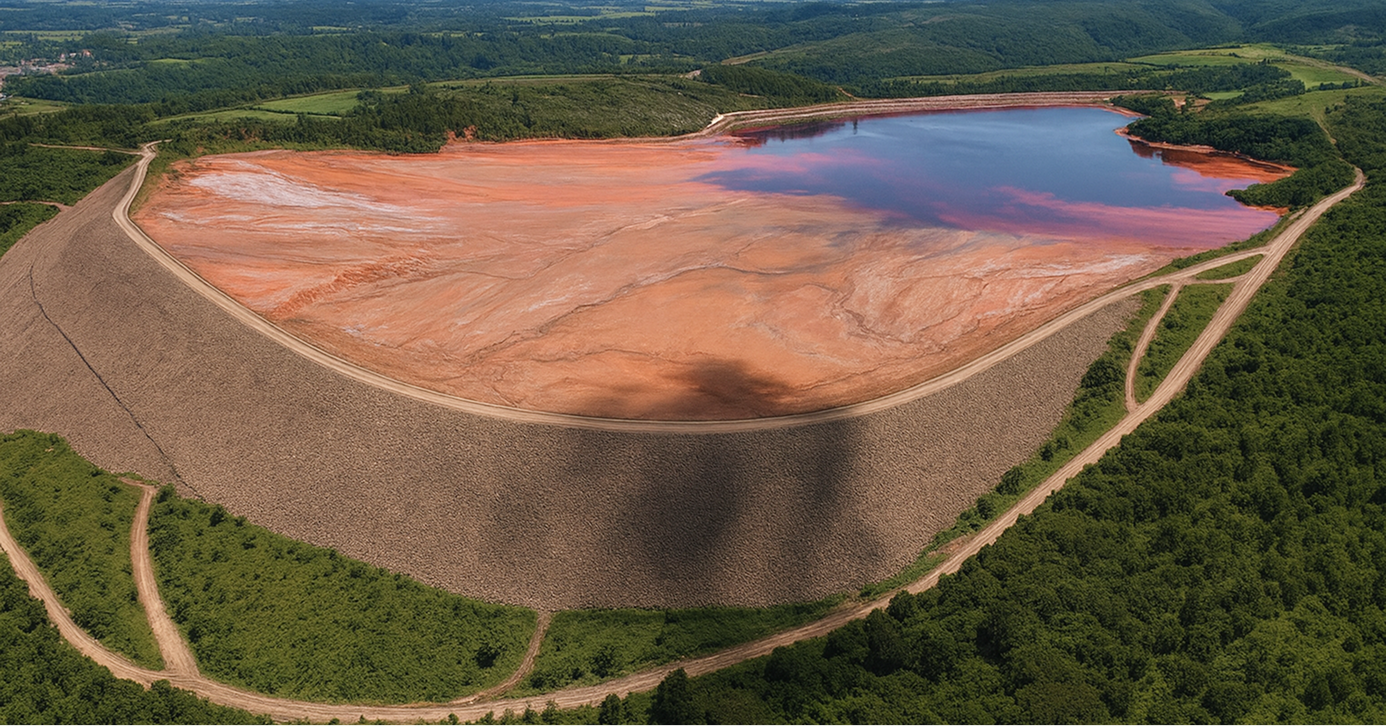
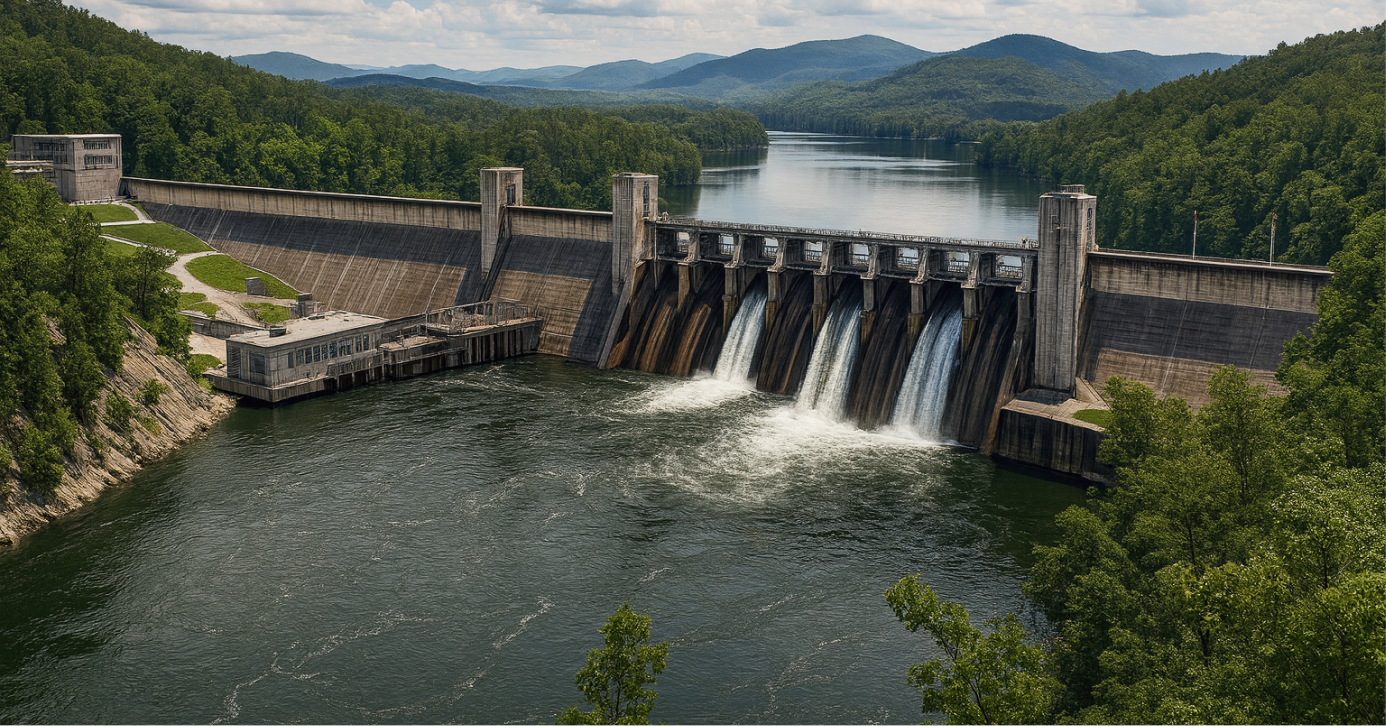
The safety of structures such as mining dams, hydroelectric dams and water retention dams requires, in addition to continuous monitoring and maintenance, a fundamental pillar of preparedness for the unexpected: the Emergency Action Plan (EAP). This technical and operational document defines strategies and procedures to reduce the impacts of structural failures, safeguard human lives, protect the environment and ensure a rapid and coordinated response to risk scenarios.
More than a regulatory obligation, the PAE is an instrument of socio-environmental responsibility and preventive engineering, which must be technically robust, permanently updated and effectively trained.
Structure of an efficient PAE
Thus, a well-structured PAE involves a multidisciplinary assessment and is based on three main axes:
- Hypothetical Breakdown Analysis: through hydrodynamic modeling, failure scenarios, flood spots and flood wave arrival times are defined.
- Delimitation of rescue zones: the Self-Rescue Zone (ZAS), where evacuation depends on the local population, is separated from the region in which the response depends on institutional actions, that is, the Public Authorities (ZSS).
- Alert, evacuation and communication system: definition of alarm protocols (sirens, SMS, radios, apps), safe evacuation routes, shelter centers and public communication flows in different channels.
International guidelines and practices
Due to the importance of the topic, it is addressed by different international entities, including:
- ICOLD (International Commission on Large Dams): recommends that PAEs be integrated into a comprehensive dam safety policy, with an emphasis on governance and stakeholder participation;
- FEMA (USA): proposes the use of integrated plans with regional disaster response systems, reinforcing the need for interoperability between agencies;
- ANM (Brazil): applicable to mining dams and establishes mandatory guidelines such as the development of hypothetical rupture studies using appropriate software, delimitation of ZAS, installation of sirens with 100% coverage, specific training plan (which includes annual simulations) and communication plan with the community;
- AnCOLD (Australia): emphasizes community communication and training focused on the most vulnerable populations;
- CDA (Canada): establishes that PAEs must be reviewed regularly based on new technical information, changes in the occupation of the downstream area and lessons learned from simulations or real incidents.
Furthermore, bodies such as the World Bank and the International Finance Corporation (IFC) recommend that internationally funded projects adopt standards such as Performance Standard 4 (Community Health, Safety and Security), which requires the implementation of PAEs in projects with significant risks.
Case studies and lessons learned
Internationally, we have several cases that have served as learning experiences for the adoption of best preventive practices and rapid response, thus helping the industry gain maturity in managing risks associated with geotechnical structures. Therefore, the following cases are cited as guidelines for current practice:
Oroville Dam (California)
In 2017, the state of California faced a major emergency involving the Oroville Dam. Following a period of heavy rainfall, the main spillway suffered significant erosion, and the auxiliary spillway also suffered structural failures. The emergency evacuation of approximately 180,000 people was necessary.
The crisis exposed weaknesses such as: outdated EAP, lack of recent simulations, poor communication and low integration between agencies. Between 2018 and 2020, the plan was restructured with international best practices: multichannel alert system, interagency command center, realistic simulations and performance indicators. The Oroville EAP became a reference in the US and a case study for FEMA.
Canada – Mount Polley tailings dam (2014)
The Mount Polley dam collapse released approximately 25 Mm³ of tailings into aquatic ecosystems. Despite the impact, there were no fatalities due to the remote location and timing of the event. The investigation revealed flaws in the emergency plan, which was generic and outdated, with no warning or effective evacuation.
After the event, the PAE was reformulated according to the CDA, with geotechnical, climatic and operational scenarios, biannual updates, real-time monitoring technology and alerts via radio, sirens and SMS. Simulations involved indigenous communities with materials in native languages.
Brazil – Fundão (2015) and B1 (2019) Dams
The two largest dam disasters in Brazil resulted in 289 deaths. In Fundão, tailings liquefaction and drainage failures caused the dam to collapse. In Brumadinho, static liquefaction was not detected in stability models.
ANM Resolution No. 95/2022 established stricter guidelines: sirens at 100% of the ZAS, mandatory simulations and annual updating of the PAE. There was integration with online alert systems, georeferenced applications and command centers with community participation. The response now includes local committees, evacuation kits and risk maps.
South Africa – Eskom Dams
South African state-owned Eskom was struggling to implement SAPs in isolated regions with low levels of education. The solution came with ICOLD guidelines and integrated regional plans by river basin.
A mobile command centre with a 7-day autonomy was set up, equipped with a radio, GPS and solar panels. Training sessions were conducted using video recordings and used in schools. Communication channels included community radio stations and churches. Eskom also adopted external audits and surprise drills to realistically test the plans.
Final considerations
The preparation and effective implementation of Emergency Action Plans transcends a mere legal obligation: it is a practice that combines technical engineering, socio-environmental responsibility and commitment to life.
The analysis of the cases of Oroville, Mount Polley, Fundão, Brumadinho and Eskom reveals a common denominator: the effectiveness of a PAE is directly related to its constant updating, community involvement and the carrying out of simulations under realistic conditions.
In a scenario of increasing climate complexity and urbanization of downstream areas, SAPs need to be technically sound, operationally viable and socially accessible. Risk governance, when well structured, not only prevents disasters, but strengthens trust between society, entrepreneurs and public authorities.
Essential pillars of international best practices
- Planning guided by real risk, not just by legal requirements;
- Ongoing community engagement, with a focus on vulnerable populations;
- Multi-channel, redundant and accessible alert systems;
- Integrated and inter-institutional governance, with clear responsibilities;
- Independent audits and continuous improvement cycles.
In the VinQ Geotechnics, we treat the PAE as a living instrument of preventive management. Our projects incorporate cutting-edge technology, scenario analysis based on state-of-the-art modeling and risk management methodologies (ISO-31000) adapted to local realities.
We work with the commitment to transform engineering into trust and prevention into value.
In the VinQ Geotechnics, we treat the PAE as a living instrument of preventive management. Our projects incorporate cutting-edge technology, scenario analysis based on state-of-the-art modeling and risk management methodologies (ISO-31000) adapted to local realities.
We work with the commitment to transform engineering into trust and prevention into value.
Authors:

John Paul dos Santos
Bachelor in Mining Engineering (UFMG), Master in Civil Engineering and Management (University of Glasgow), Specialist in Geotechnical Engineering and Project Management.
Mining Engineer specializing in geotechnics and project management, an international reference in dams and geotechnical structures applied to mining.

Matheus Vicentini
Civil Engineer (Unilavras), Specialist in Geotechnical Engineering (PUC Minas).
Civil Engineer with experience in geotechnics applied to mining, with experience in projects, audits and dam decommissioning works.
 English
  Português do Brasil