
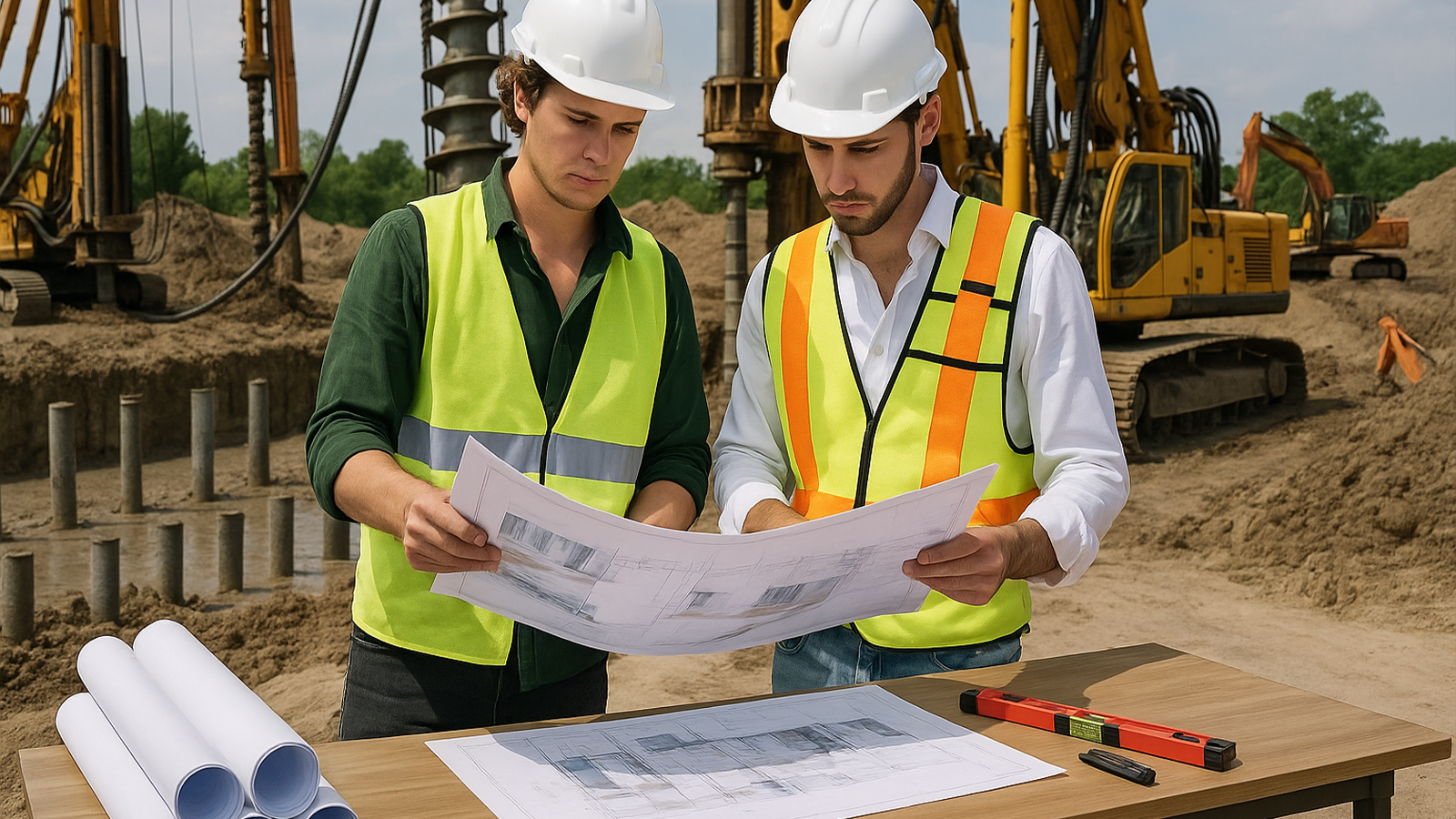
Engineering of Record (EoR): Pillar of Geotechnical Governance in Critical Projects

Engineering of Records, often referred to by the acronym EoR (from the English Engineer of Record), is an essential function within technical governance systems applied to critical structures such as mining dams, waste rock dumps, and tailings deposits. More than a regulatory requirement, it is a strategic approach that aims to ensure traceability, technical accountability, and compliance with international best practices in safety and sustainability.
Origin and Evolution of the EoR Concept
The EoR concept gained traction in countries like Canada and the United States following serious incidents involving structural failures, and has been progressively incorporated into global engineering practices. The role of Engineer of Record (Registration Engineer – EdR) is the professional responsible for maintaining technical continuity, guaranteeing the integrity of records and ensuring that all phases of the project are properly documented, evaluated and supervised.
In Brazil, although legislation on the subject is evolving, international guidelines and lessons learned, especially after the Mariana and Brumadinho disasters, have accelerated the incorporation of the EoR figure as an indispensable agent within geotechnical governance.
Entity / Country
EoR Recognition
Mandatory
Technical Scope
Observations
Canada (CDA)
Yes
Yes (depending on the province)
Design, construction, operation and closure
Pioneering country in defining EoR after dam accidents
USA (USSD)
Yes
In many states, yes
Focus on dams and critical structures
High integration with risk management and external audits
Australia (ANCOLD)
Yes
Recommended, not mandatory
Mining and water infrastructure projects
Strong focus on stability and safe operation
Brazil (ANM)
In evolution
Not yet formalized
Some functions absorbed by RTs and consultants
Growing discussion after recent disasters
European Union (Directive 2006/21/EC)
Indirect (no formal title)
Yes (under certain security requirements)
Safety of dams and tailings facilities
Strongly linked to the precautionary principle
ICMM/ICOLD
Yes (as good practice)
Not mandatory
Recommended global application
Conceptual basis for many national standards
Main Responsibilities of the EoR
- Consolidate and interpret historical, design, construction, operation and maintenance data of the structure.
- Validate the conceptual and geotechnical models used in stability and performance analyses.
- Issue technical opinions and sign the main documents related to the safety and compliance of the structure.
- Ensure the traceability of technical and operational decisions.
- Actively participate in audits, regular inspections, and emergency action plan updates.
Complementary and Independent Role
The EoR does not replace the company's routine technical teams, but acts independently and complementaryly, promoting institutional strengthening and continuous improvement of geotechnical performance.
Requirements for Acting as EoR
To perform the function competently, the EoR must have:
- Proven experience in projects and operations with similar structures.
- In-depth technical and regulatory knowledge of stability, hydrology, geotechnics and dam engineering.
- Autonomy and technical independence to issue impartial opinions, even in the face of operational or corporate pressures.
This independence is one of the pillars of a successful EoR model, ensuring that decisions are always guided by the safety of the structure, people, and the environment.
Benefits and Impacts of EoR Implementation
Including the EoR function in a project raises the level of technical and institutional maturity of the enterprise. Critical structures now have an additional line of defense, ensuring that any technical deviation, emerging risk, or critical condition is identified, assessed, and addressed quickly and responsibly.
For companies seeking reputation, longevity, and sustainability, EoR is not just a future requirement: it is a present governance decision.
In the VinQ, EoR is part of the solution! We incorporate EoR as a key element in our clients' technical and institutional governance. We operate independently, responsibly, with experience and a commitment to safety and sustainability.
Authors:

John Paul dos Santos
Bachelor in Mining Engineering (UFMG), Master in Civil Engineering and Management (University of Glasgow), Specialist in Geotechnical Engineering and Project Management.
Mining Engineer specializing in geotechnics and project management, an international reference in dams and geotechnical structures applied to mining.

Matheus Vicentini
Civil Engineer (Unilavras), Specialist in Geotechnical Engineering (PUC Minas).
Civil Engineer with experience in geotechnics applied to mining, with experience in projects, audits and dam decommissioning works.
 English
  Português do Brasil