
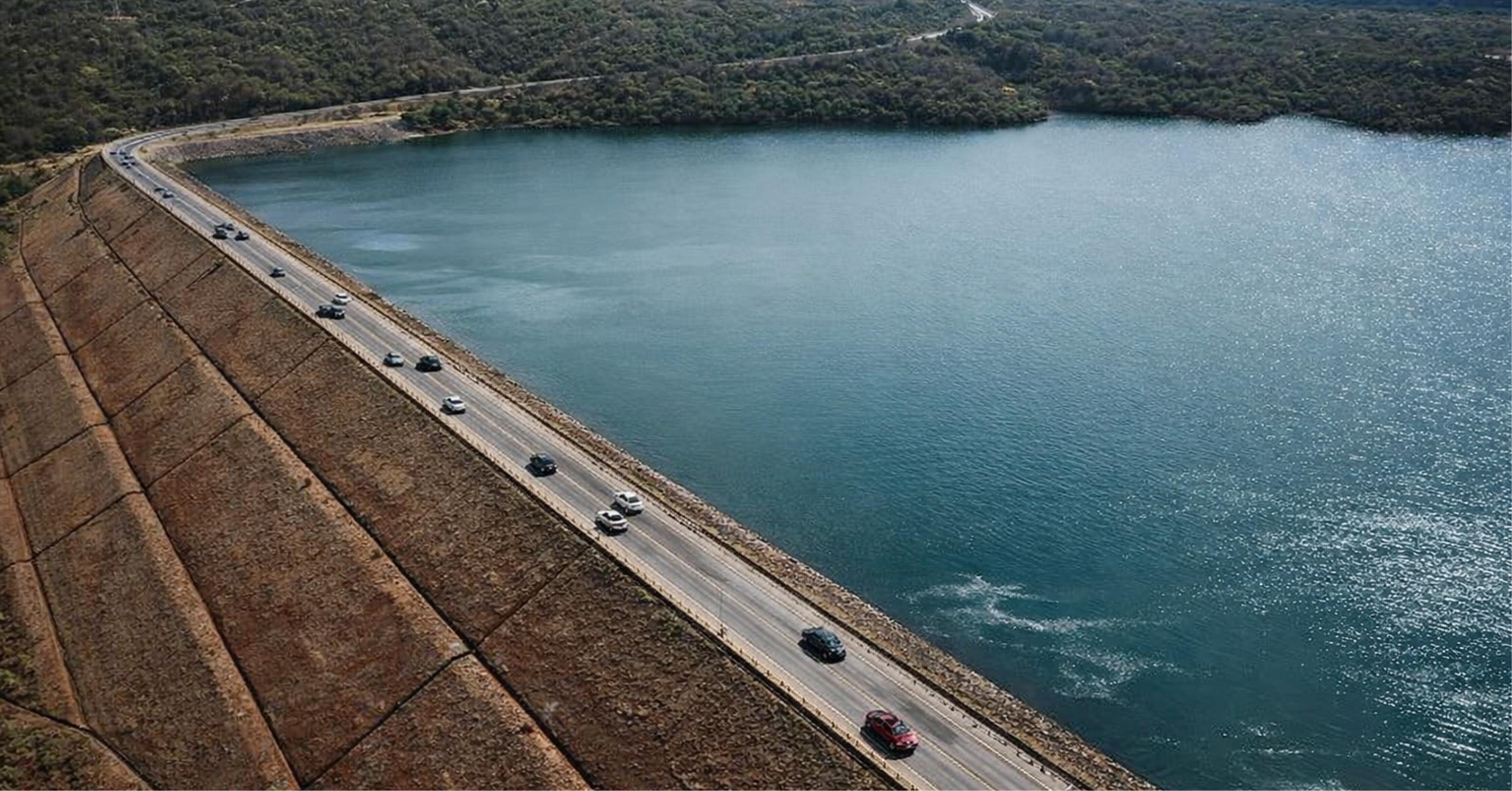
When to use Limit Equilibrium, Numerical Equilibrium, or DEM: a selection guide in geotechnical modeling.

Based on the guidelines of the LOP Project and ISRM.
The importance of technical choice.
In rock slope projects, and to a lesser extent in soil and tailings projects, the most common mistake is not "using the wrong method." It's choosing the method out of habit and then adjusting the question to fit the familiar tool. The LOP Project guidelines (Large Open Pit) and of ISRM They converge on an objective premise: the method must be a consequence of three elements, treated explicitly and traceably:
- Decision to be made (project, operation, support, phasing, triggers, area exclusions).
- System observability (what you measure and see in the field versus what you infer).
- Relevant uncertainty (that which changes the decision) and how it will be quantified, tested, and communicated.
The provocation, "without software fetishism," is straightforward: a good model is one that reduces uncertainty relevant to the decision, while preserving traceability, calibration, and governance. A bad model may appear sophisticated, but it delivers numbers with false precision, and that is a technical and institutional risk.
Start with the question (not the method).
Before choosing Boundary Equilibrium (BE), Numerical Equilibrium (MEF/NEF), or DEM/DFN, write the answers below in one sentence and use this as the "Model Terms of Reference":
- What decision will be made based on this study? (geometry, berms, angles, phasing, support, lowering, dismantling control, triggers)
- Which mechanism controls the risk? (planar, wedge, tipping, circular, step-path, progressive breakdown, ravelling(block falling, creep, etc.)
- What is the scale and time horizon? (bank/interramp/end; short-term vs. LoM; static vs. transient)
- What is observable and what is inference? (structural mapping, piezometry, deformations, tests, instability history)
- What uncertainty predominates and how will it be addressed? (water, joint strength, persistence/connectivity, blast damage, in situ stresses, lithological variability)
If these answers don't exist, the choice of method becomes purely aesthetic. And the cost of that becomes apparent later: a blown schedule, endless discussions about parameters, and a "pretty" report that doesn't support a sound technical decision.
What does each approach solve?
1) Limit Equilibrium (Limit Equilibrium, LE)
Best when:
- The mechanism is well defined and can be represented by potential surfaces (circular in soils/tailings; planar/wedge/overturning in rock).
- The objective is screening, comparison of scenarios and safety envelopes (geometry, water, resistance, loads).
- You need agility and transparency for governance and communication with operations and risk management.
Classic limits:
- It does not accurately represent deformability, stress redistribution, and damage progression; it describes "whether it resists," not "how it evolves."
- In rock, it can become unsuitable when the structural geometry is complex (critical persistence, step-path, multiple domains, connectivity).
Good LOP-friendly practice: treat the LE as a baseline even when using numeric/DEM. It serves as a consistency check and order of magnitude indicator.
2) Continuous numerical model (FEM/FDM and constitutive models)
Best when:
- The decision involves stress-strain, convergence, redistribution, mining/excavation sequencing, support-rock mass interaction, and relaxation effects.
- You need to test hypotheses related to in situ stresses, excavation/blast damage, equivalent anisotropies, subsidence, and, where applicable, transient effects (with strong governance).
- The mechanism is complex and cannot be contained within a simple surface, but it still makes sense to represent the mass as an equivalent continuum (with equivalent discontinuities or discontinuities inserted via elements/joints).
Classic limits:
- Without instrumentation, back-analysis, or field evidence, calibration becomes underdetermination: many parameters "explain" the same behavior.
- Mesh dependence, contours, numerical damping, and failure criteria can produce "laboratory" stability if sensitivity tests and verifications are not performed.
Harsh message: numerical data is excellent for answering "how much deformation occurs and where it concentrates," but it only becomes engineering when there is discipline in calibration, verification, and auditing of the model.
3) DEM and discontinuous methods (DEM/DFN/DDA/Blocks)
Best when:
- Risk is governed by relative movement in discontinuities: wedges, toppling, raveling, rockfall, step-path with structural connectivity.
- The structural geometry (orientation, spacing, persistence, roughness, infill) is the primary controller and needs to be explicitly represented.
- The question requires simulating block interaction and instability trajectories, and you have (or explicitly assume) a probabilistic model for what is not observable.
Classic limits:
- High data demands, especially regarding persistence and connectivity, often the least observable aspects.
- Complex calibration (contact parameters, normal/shear stiffness, damping, timestep).
- There is a real risk of turning into a "cinematic simulator" if there are no validation metrics and acceptance criteria.
Rule of thumb: when the continuum fails conceptually, DEM (Digital Mathematical Model) can be the way to go; when data is lacking, DEM can be the way to confidently deceive oneself.
How to combine methods
The correct selection is usually a hybrid one: LE as baseline, and scaling to numerical/DEM according to the question.
1) "Which mode of rupture is plausible and what is the margin?"
- Primary: Kinematic LE + Stability LE
- Complementary: numeric with discontinuities or DEM/DFN if connectivity/persistence is critical and decisive.
2) "What changes with phasing, stresses, and damage from excavation/blasting?"
- Primary: continuous numerical level.
- Additional information: LE as a sanity check (simplified scenarios) to prevent parameter drift.
3) "I want to predict deformations and compare them with monitoring."
- Primary: numerical with calibration by displacements/velocities and active zones.
- Additional information: LE for envelopes and margin communication by scenario.
4) "Risk is dominated by blocks and structural connectivity"
- Primary: DEM/DFN/DDA for kinematics and key blocks.
- Complementary: LE for simplified surfaces and global consistency.
5) "I need a single safety factor for auditing"
- Mature response: FS + uncertainty + operational triggers + calibration evidence.
- Avoid the "just a number" trap: this usually signals weak governance and an incentive to rely on modeling to make it work.
Conditions for applicability: what needs to exist before it can run.
Maturity here means recognizing that "running" is cheap; running with uncontrolled inference is expensive.
Minimum data per approach
- LE
- Reliable geometry, stratigraphy/domains, water scenarios/pressures, traceable parameters (ranges and sources).
- In rock: structural families by domain and variability.
- Numeric
- Beyond LE: deformational properties (moduli), in situ stress assumptions, damage/relaxation representation, and minimum calibration strategy.
- Ideal: linkage with instrumentation, behavioral history, and retrospective analyses.
- DEM/DFN
- Beyond LE: orientation distribution and, crucially, explicit hypotheses about persistence/connectivity (deterministic or probabilistic), joint/contact parameters, and validation metrics.
A conceptual model is mandatory.
Regardless of the method, it is necessary to make it explicit:
- Water: where it is, how it connects, why it varies (fractures, perched, drainage, transients).
- Anisotropies: what governs them (structures, foliations, shear zones, contacts).
- Mechanisms by scale: bank vs. ramp vs. end slope.
Without this, the software only formalizes implicit assumptions and transforms them into "results".
Calibration and sensitivity: the difference between engineering and animation.
Acceptable calibration
- Back-analysis of stable/unstable events, keeping parameters within defensible ranges.
- Evidence-driven adjustment: deformations (numerical), occurrence of mechanisms and instability patterns (rock/DEM).
- Use of multiple sources: mapping, instrumentation, inspections, operational history.
Mandatory sensitivity (the minimum for governance)
Run explicit variations of:
- Water (pressures, noise, levels, adverse scenarios, envelopes and, where applicable, transients)
- Persistence/connectivity (main uncertainty in rock)
- Joint strength (peak vs. residual, roughness, fill, scale)
- Disassembly/relaxation damage (disturbed zone, degradation)
- Geometric tolerances (berms, angles, offsets, model simplifications)
Minimum expected output: sensitivity ranking (tornado chart) connecting “variable → change in decision”. If this does not appear, the study is incomplete.
Model governance: how to avoid "modeling to make it work"
Governance is the antidote to technical self-deception.
Governance checklist (regardless of method)
- Traceability: each parameter has a source, range, and justification.
- Version control and reproducibility: files, scripts, mesh, random seeds (DEM/DFN).
- Sanity checks: orders of magnitude, balance, plausible deformations, comparison with LE.
- Separation between calibration and prediction: calibrate on one subset, test on another.
- Acceptance criteria defined before running: "the model is acceptable if...".
- Independent peer review: someone needs to try to "break" your model.
Typical signs of "modeling for success"
- Parameters without justification ("we always use them this way").
- Treated water for convenience (clean water line), without exploiting adverse pressures and scenarios.
- Persistence/DFN "tightened" to achieve desired stability/instability.
- Fine-tune until a target FS is "passed" without discussing uncertainty.
- Mesh/contour change/damping/timestep until the result "stops bothering you".
- Excessive precision with uncertain inputs (two decimal places as if they were real).
- Absence of unfavorable cases (only "baseline" and "optimistic" scenarios exist).
This is not just a technical problem; it's a governance risk: it creates false evidence for critical decisions.
Layered approach (LOP-friendly): chain, don't replace.
Mature practice, aligned with the LOP and ISRM, is to build a defensible decision-making system, not a "final model":
- Screening and baseline: Cinematics + LE with scenery and envelopes.
- Refinement by decision: Numerical measurement for deformations, stresses, water hypotheses, and damage (with calibration and sensitivity).
- Escalation to the discontinuous: DEM/DFN when blocks/connectivity govern risk or when structural uncertainty is explicitly addressed (including in a probabilistic way).
- Operational tying: Translate what the model actually states into monitoring triggers, operational limits, and actions.
Choose method as you choose risk.
When the method is chosen out of habit, engineering is outsourced to the tool, and the price is hidden risk. The highest standard is to assume: uncertainty exists; therefore, the model must highlight it, and the process must prevent you from being misled.
Authors:

John Paul dos Santos
Bachelor in Mining Engineering (UFMG), Master in Civil Engineering and Management (University of Glasgow), Specialist in Geotechnical Engineering and Project Management.
Mining Engineer specializing in geotechnics and project management, an international reference in dams and geotechnical structures applied to mining.

Matheus Vicentini
Civil Engineer (Unilavras), Specialist in Geotechnical Engineering (PUC Minas).
Civil Engineer with experience in geotechnics applied to mining, with experience in projects, audits and dam decommissioning works.

 English
  Português do Brasil