
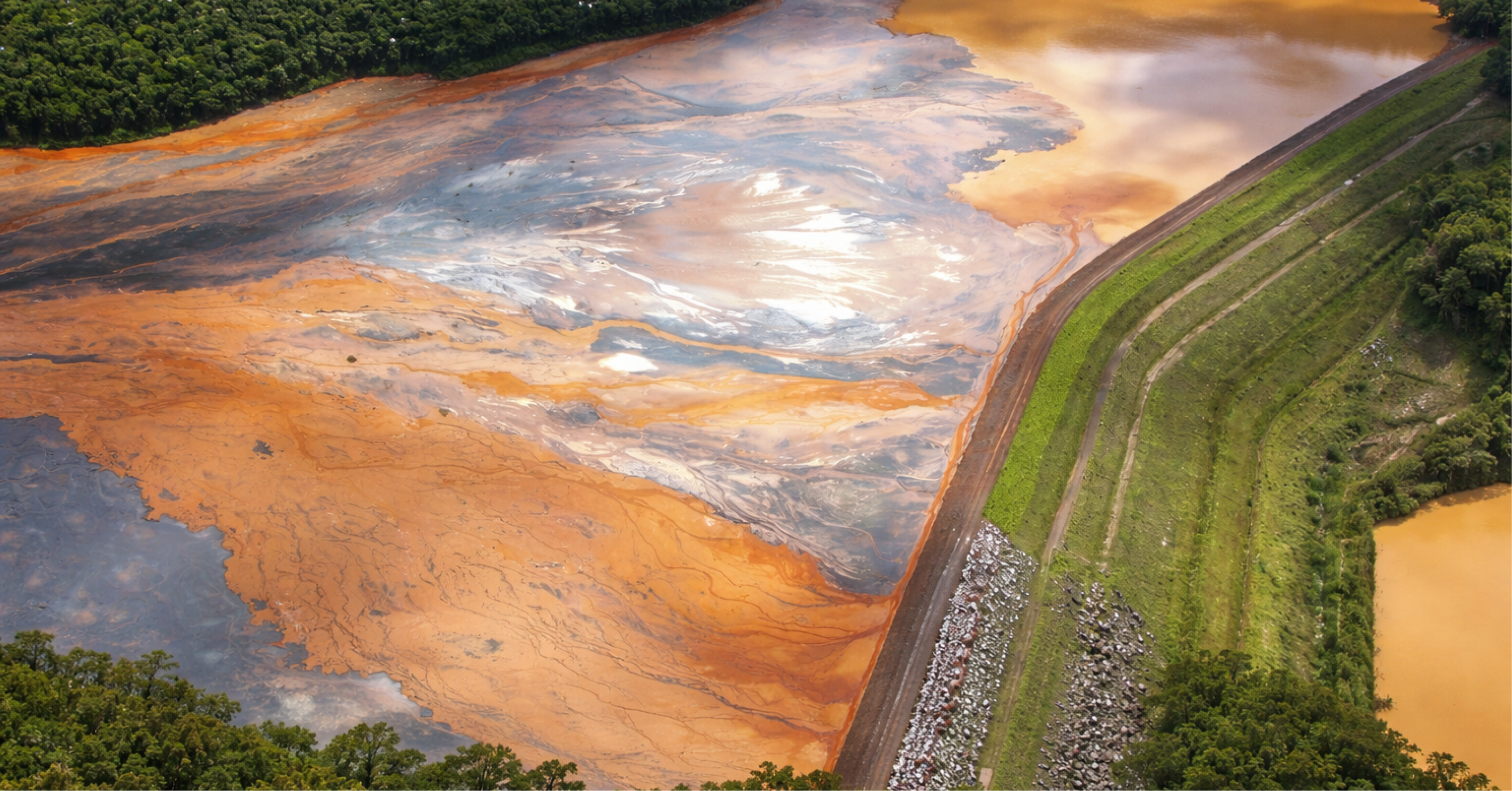
Geotechnical parameters in tailings and fines: from the laboratory to the decision-making process.

In tailings and fine materials, the greatest source of risk is not "lack of data." It is the poorly governed conversion of local measurements into corporate decisions with an appearance of precision. The laboratory delivers results under controlled conditions, on necessarily limited test specimens frequently affected by sampling and reconsolidation disturbances. The operation, in turn, imposes daily variability in moisture, density, water chemistry, effective particle size distribution, deposition method, and compaction energy. The design and management of assets then depend on the coherence between these worlds. When this bridge is fragile, the pattern is well-known: "unique" and poorly traceable parameters, models with implicit sensitivity, margins that dissolve when the process changes, and, ultimately, reactive decisions when the field contradicts the thesis of the report.
This article outlines a parameter governance system that transforms trials into useful evidence, with traceability, explicit selection rules, and integration with operational controls. The goal is not to find the "correct number," but rather to build a behavioral envelope robust enough to support decisions under uncertainty, with clear mechanisms for updating and calibration throughout the asset's lifecycle.
In general, VinQ warns: a parameter without explicitly defined domain, state, and loading condition is not an engineering parameter. It is merely a number, appearing precise, but lacking real decision-making power.
Why tailings and fines require their own method.
Tailings and fines are materials highly dependent on stress state and path. In hydraulic deposits, natural segregation creates domains with significantly distinct microstructure, grain size, permeability, and density, often at scales that the investigation plan does not capture if it is oriented only to "spatial coverage." In filtered piles and partially saturated systems, small variations in moisture and suction non-linearly alter permeability and stiffness, affecting both the hydraulic path and resistance mobilization. In both configurations, behavior tends to change more due to operational processes than to classic "geological" variations. The consequence is straightforward: parameters without explicit definition of domain, state, and loading condition are not engineering parameters; they are approximations that can induce overly confident decisions.
Furthermore, scale and sampling effects are crucial. Sample quality, structure preservation, reconsolidation, and representativeness of the initial state control the outcome as much as the “material” itself. Two technically correct tests can diverge significantly because they answered different questions: drained versus undrained, monotonic versus cyclic, low versus high rate, preserved versus reshaped structure. Without a framework connecting each outcome to the decision it supports, the dataset becomes a bulky and inactive repository.
The central premise: decision first, rehearsal later.
In operational terms, each critical decision must be associated with a specific set of parameters, defined for a clear domain and state. Drained stability, undrained response, hydraulic control, and deformation performance do not share the same parameters or the same acceptable levels of uncertainty. Mixing these contexts is one of the most common ways to create fragile models.
The starting point is not the laboratory program. It is the asset's decision map. Before selecting c'–φ', su, k, compressibility parameters, or retention curves, it is mandatory to specify which decision will be made and which mechanism governs the risk. Drained global stability, undrained instability in rapid events, static or cyclic liquefaction, deformation performance, pore pressure control, fines migration, and internal erosion all require distinct sets of evidence and, above all, distinct representative states. The question that guides the campaign is simple and difficult at the same time: what minimum set of parameters, with what level of confidence, is necessary to support this decision, in this domain, under this operating state and this loading path?
When this question is neglected, the approach of "doing more trials" emerges as a substitute for strategy. The opportunity cost is high. More data without a clear hypothesis increases noise, delays decisions, inflates budgets, and produces a false sense of control. The alternative is a hypothesis-driven campaign, designed to reduce uncertainty only where it changes decisions and where the risk of consequence is significant.
A governance system: from domain to project value.
Translating laboratory results into parameters for design and operation requires three layers of structure.
First layer
The first is the definition of geotechnical domains and operational states. Domains are distinct populations of behavior that need to be treated separately. In hydraulic tailings, this typically involves, at a minimum, beach zones, core mud, transitions, and reprocessed materials, with their respective density, permeability, and sensitivity gradients. In filtered stockpiles, segmentation by moisture ranges, compaction energy, layer thickness, and wetting-drying cycles tends to be as important as the origin of the material. Operational states need to be explicitly defined in terms that the operation recognizes and controls, such as moisture range, dry density, degree of saturation, suction when applicable, and deposition/compaction indicators. Without this, any statistics mix populations, and the average ceases to mean anything useful.
Second layer
The second layer is the representativeness of the test in relation to the mechanism. Drained and undrained shear strength are not "two options"; they are responses to distinct drainage and velocity conditions. Tests and interpretations should reflect plausible stress paths for the critical scenario. For undrained shear, in particular, the adoption of models consistent with stress history and structure, such as SHANSEP-type approaches or critical state-based structures, can be the difference between a parameter transportable to the field and a "laboratory-only" result. For hydraulics in thin materials and partially saturated systems, the assumption of constant permeability is often the riskiest hypothesis in the study, and should be defended with evidence or replaced by moisture/suction-dependent functions. For deformability, the typical error is to treat it as an automatic derivative of shear strength, when in practice stiffness is often more sensitive to the state and more critical for performance and operational integrity.
Third layer
The third layer is the explicit management of variability and uncertainty. Parameters should be defined as ranges and distributions by domain and state, with complete traceability of origin, sample quality, reconsolidation, method, acceptance criteria, and limitations. In risk management, the question is not "what value," but rather "what plausible envelope and how does it factor into the decision." Outliers are not automatically "errors"; in heterogeneous structures, they may be precisely the expression of the weak domain that controls the overall response.
Selection of values: explicit rule aligned with consequence and operational control.
The most critical step in the process is choosing the "project" value. It cannot be intuitive or based on habit. This is where governance comes into play: the selection must follow an explicit and auditable rule, aligned with the consequence and the level of operational control.
In many cases, the characteristic value approach via percentiles is the most transparent: use, for example, a P10–P25 for strength under critical conditions, maintaining P50 for performance scenarios under normal operation, always separated by domain and by state. For permeability, often with a lognormal distribution, the selection should consider percentiles in log(k) and the sensitivity of the hydraulic model. For stiffness, the recommendation is to segment by deformation ranges and declare the regime of interest, avoiding undue extrapolations. In frameworks that adopt partial factors, these factors need to reflect not only "consequence class," but also quality of evidence and degree of control of the state in the field. And when the asset requires decisions with low tolerance to uncertainty, the natural path is to incorporate probabilistic analyses, not as a sophistication, but as a governance tool, with distributions by domain, correlations, and updates as the field returns information.
The decisive criterion, however, is the link to operational variables. In tailings and fines, parameters such as su and ek change so much with moisture and density that it makes no sense to treat them as constants if the process does not control the state. Good practice is to parameterize the response as a function of monitorable parent variables, such as su = f(moisture, density) and ek = f(moisture/suction), with envelopes per domain. This transforms "numbers" into control rules and allows engineering and operations to communicate in the same language.
A parameter only fulfills its role when it connects to a usage rule and an operational trigger. Parameters that do not influence operational limits, actions, or restrictions do not control risk; they merely document an assumed condition.
The operational link: parameters that become triggers and decision-making rituals.
A parameter only becomes useful when it changes management behavior. This requires integration with operational and monitoring routines. The playbook stipulates that each critical parameter comes with a usage rule and a set of operational triggers: which variables the operation measures, which limits represent an exit from the assumed envelope, which actions are mandatory due to severity, and when the parameter needs to be reviewed.
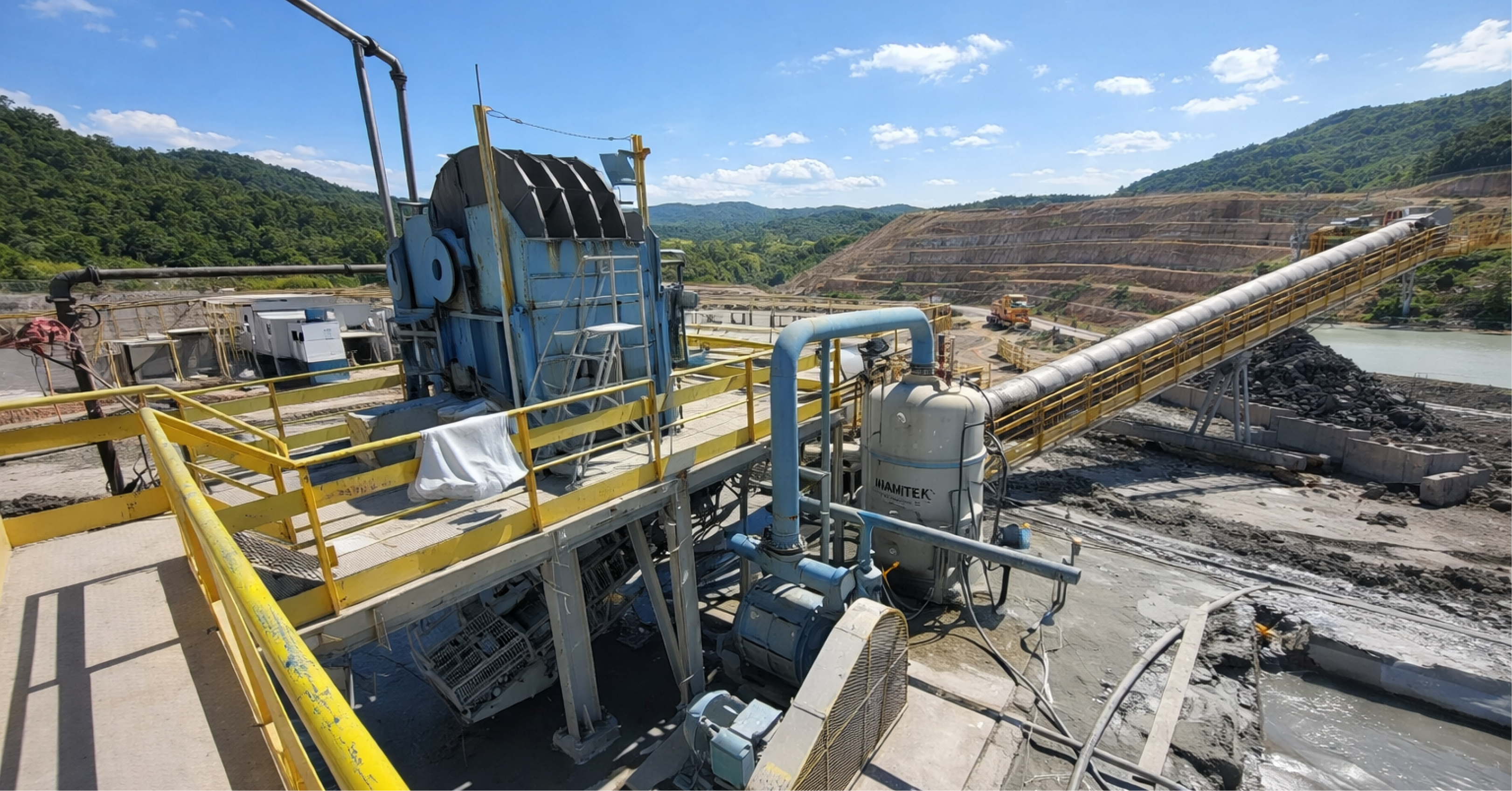
In filtered stockpiles, for example, moisture is often the primary variable. If moisture exceeds the design range for a persistent period, the system must provide for concrete actions: adjusting layer thickness, increasing compaction energy, restricting geometric advancement, intensifying inspections and instrumentation verification, and updating the set of parameters applicable to that state. In deposits with significant fines and pore pressures, the response must be even more disciplined: if piezometric readings exceed the predicted envelopes for the phase, the rule cannot be "follow"; there must be a trigger to freeze critical steps, revise hydraulic assumptions, perform targeted investigations, and recalibrate parameters. This is where governance on paper becomes governance in the field.
Calibration and updating: a closed-loop process as a requirement, not as an "improvement".
The process doesn't end with the publication of the report. In tailings and fines, updating is part of the method. The playbook requires a calibration plan from the outset, defining which indicators will be used to compare predictions and reality, such as pore pressures, settlements, deformations, water levels, and flow rates in drains. When there is systematic deviation, the review should begin with the domain and state assumptions, as the error often lies in "which material" and "which condition" is being represented, and not in a marginal parameter adjustment. Only then is the parameter adjusted within the envelope, with justification and versioning. This version control, combined with a clear audit trail, is what sustains consistent decisions throughout inevitable operational changes.
Structure: roles, deliverables, and gates
The execution model relies on clear responsibilities. The asset's "risk owner" defines decisions and constraints and approves trigger rules. The geotechnical function, under an EoR or EoR-like arrangement, structures domains, assumptions, and envelopes, and signs off on choices. The laboratory delivers results with stated QA/QC and limitations. Process and geology provide variables that explain variability and allow for control. Instrumentation ensures feedback from the field. Data management maintains the Parameter Register versioned and auditable.
The core deliverables are threefold. First, a matrix linking decision to mechanism, parameters, and evidence, ensuring that each trial answers a decision question. Second, a Parameter Register that consolidates parameter envelopes, distributions, reliability, origin, and usage rules by domain and state. Third, a set of operational criteria and triggers that connect monitorable variables to the assumed envelope, with mandatory actions and review criteria. The process gates are equally objective: without a defined mechanism and critical condition, the campaign does not advance; without defined domains and states, a “single value” is not published; without an explicit selection rule, the parameter is not accepted; without a calibration plan, the study is not considered complete.
What is delivered
By imposing discipline in decision-making, domain, state, variability, and operational integration, this playbook avoids three structural flaws: mixed population statistics, extrapolation of laboratory results to states that the field does not reproduce, and selection of values by habit or convenience. In return, it delivers a pragmatic governance system that allows for transparent risk discussion, sustains decisions under operational changes, and reduces uncertainty in a targeted way. In managerial terms, this translates to less rework, fewer "surprises" in critical phases, greater performance predictability, and an auditable path for how the organization decides under uncertainty.
Ultimately, parameters in tailings and fines are not a chapter in the report; they are a risk control mechanism throughout the asset's lifecycle. The difference between maturity and improvisation lies in treating uncertainty as part of the system, not as a detail to be hidden.
Authors:

Leandro Azevedo da Silva
Bachelor in Geology (UFRRJ), Master in Mining Engineering (UFMG) and Specialist in Mineral Resources Engineering.
A geologist with nearly 20 years of experience in geotechnics, he leads technical projects at VINQ, combining innovation and safety in mining solutions.

Matheus Vicentini
Civil Engineer (Unilavras), Specialist in Geotechnical Engineering (PUC Minas).
Civil Engineer with experience in geotechnics applied to mining, with experience in projects, audits and dam decommissioning works.

 English
  Português do Brasil