
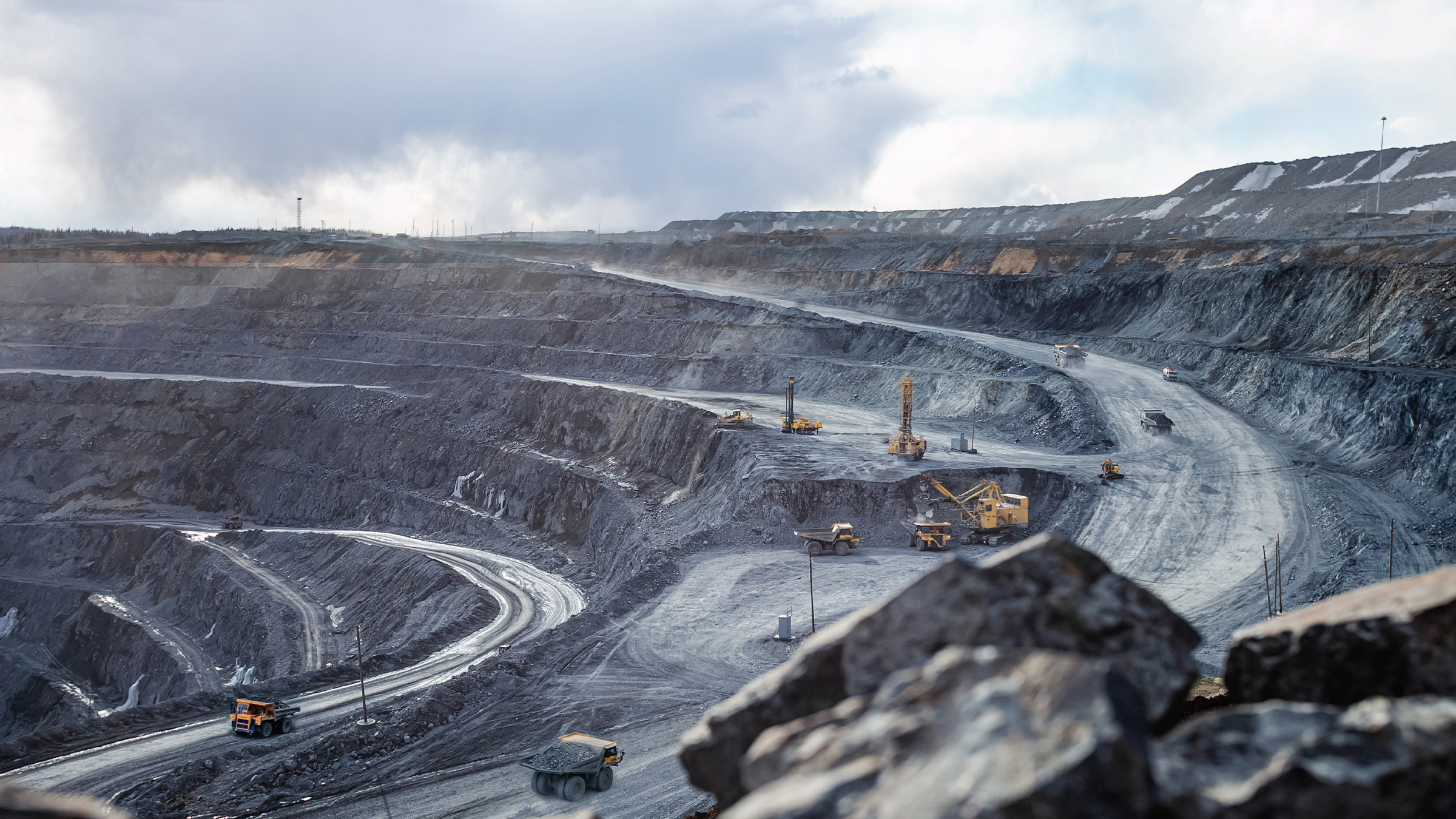
Mine Closure: Stability, Sustainability and Legacy

Mine closure is one of the most challenging and critical phases of the mining lifecycle. More than a legal requirement, it represents a long-lasting commitment to geotechnical stability, the functional environmental rehabilitation and the reconstruction of links between territory, society and ecosystem.
In the VinQ Geotechnics, we understand that the closure of mining activities must be planned from the initial phase of the project, based on rigorous technical criteria and focused on leave a positive legacy for future generations.
Geotechnical Stability: Commitment to Long-Term Safety
THE physical stability of the remaining structures – such as final slopes, tailings dams and waste rock piles – must be designed to ensure passive resilienceThis includes:
- Attenuated geometries
- Erosion coverage
- Efficient drainage systems
- Stable materials that do not depend on constant maintenance
Continuous monitoring, with geotechnical instrumentation (piezometers, inclinometers, surface markers) and advanced numerical modeling (FEM and LEM), is essential to predict and mitigate risks over time.
At VinQ, we follow international guidelines such as ICMM, CDA, ANCOLD and the ANM standards, prioritizing high safety factors and structural predictability.
Environmental Rehabilitation and Functional Ecology
Rehabilitating a mined area goes far beyond reforestation. It is necessary restore the ecological functionality of soil and landscape, focusing on:
- Erosion control
- Careful selection of native species
- Restoring water and ecological connectivity
Techniques such as soil bioengineering and technical revegetation contribute to creating resilient ecosystems, adapted to regional conditions.
Materials such as waste and sterile, if correctly stabilized and encapsulated, can be reused for:
- Filling of gullies
- Modeling of containment areas
Hydrogeotechnics and Acid Drainage Control
THE post-closure water management it is essential to avoid:
- Acid mine drainage
- Contamination of water resources
- Long-term structural instability
For this, passive solutions are applied (such as constructed wetlands and reactive barriers) or active (such as chemical neutralization plants).
These strategies must be preceded by detailed geochemical and environmental studies, using tools such as:
- PHREEQC
- Geochemist's Workbench
- Real-time environmental monitoring
Social Engagement and Legacy Planning
International experiences show: the mine closure is only successful when the community actively participates of all stages.
Among the possible transformative actions, the following stand out:
- Retraining of the local workforce
- Implementation of new production arrangements
- Reuse of the area for renewable energy, tourism or conservation
The goal is to turn the closure into a new economic, environmental and social opportunity.
Self-Assessment and Governance in Closure Planning
VinQ has developed a technical self-assessment tool that helps entrepreneurs diagnose the maturity of the closure plan based on criteria such as:
- Geotechnical stability
- Acid drainage control
- Ecological rehabilitation
- Social engagement
- Planning for future use
- Compliance with legislation
This tool can be used for both technical audits as for continuous improvement of the closure plans.
Conclusion: Closing Well is Leaving a Legacy
Mine closure requires specialized technical knowledge, environmental responsibility and social sensitivity.
More than closing a cycle, it is a opportunity for regeneration:
Transform risks into security, liabilities into assets and degraded areas into productive and sustainable territories.
In the VinQ Geotechnics, we believe that closing well is opening paths – for the environment, for communities and for the future.
 English
  Português do Brasil