
[Article 04 of 05] The Mining Production Chain: Processing, Transportation and Tailings Management – Efficiency, Risks and Sustainability

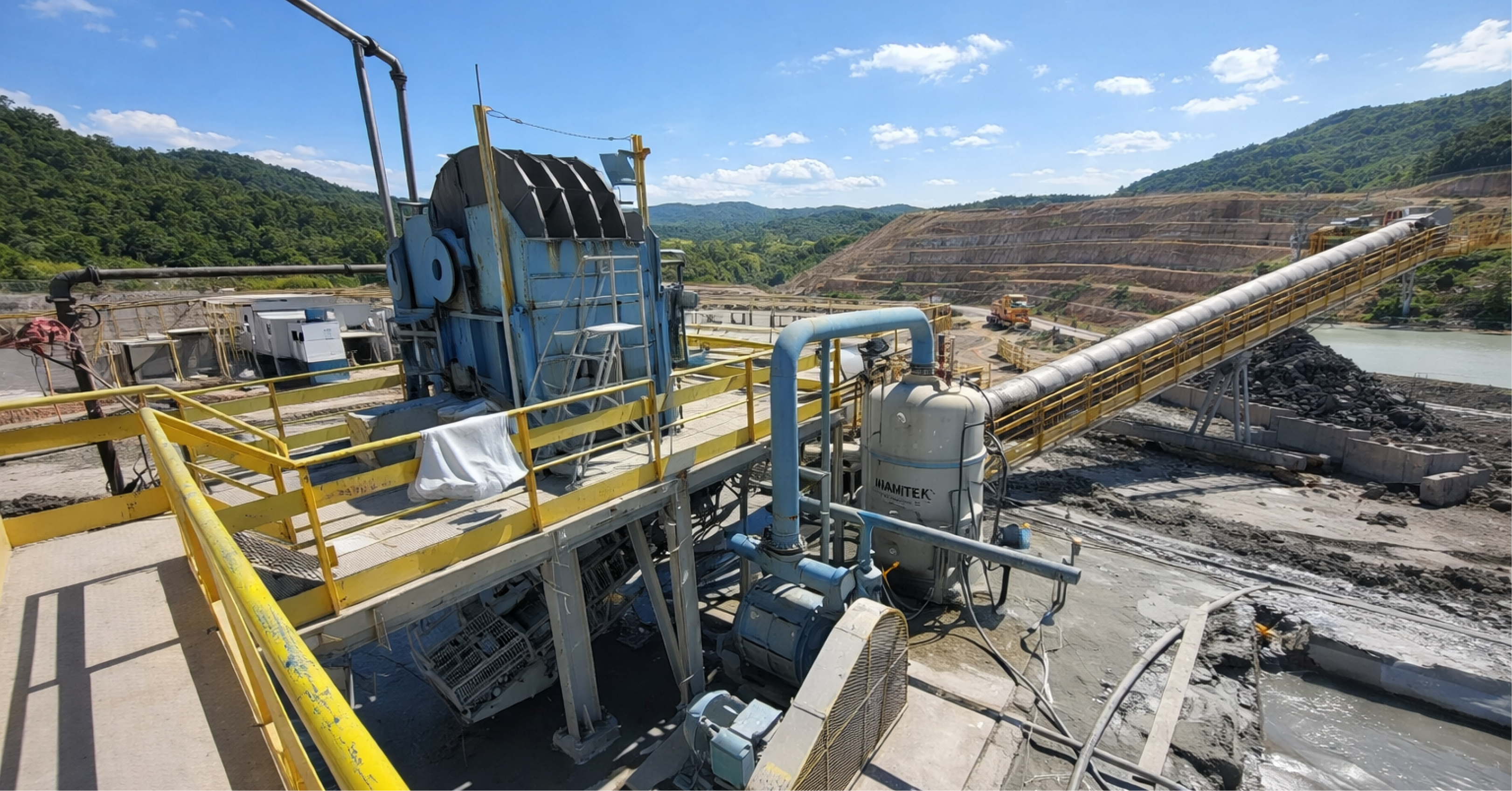
Mineral processing is the step that transforms extracted raw ore into a value-added product, suited to market specifications or subsequent stages of the production chain. It involves operations such as crushing, grinding, classification, concentration, and physical-chemical separations, all of which are highly dependent on the material's intrinsic characteristics.
Mineral Processing: Challenges and Risks
From a geological perspective, the main risks are linked to mineralogical complexity and ore variability throughout the mine. Difficult-to-separate gangue minerals, the presence of expansive clays, or unexpected chemical changes can reduce process efficiency, directly impacting metallurgical recovery and the final product quality. This requires constant process adjustments and greater integration between geology and operations.
Geotechnical Aspects
From a geotechnical perspective, beneficiation is closely linked to the management of the generated tailings. Dry tailings piles and wet tailings dams present stability-related vulnerabilities, conditioned by factors such as:
- Material granulometry.
- Saturation and poor drainage.
- Risk of liquefaction.
Auxiliary structures, such as retaining dikes, sedimentation basins and artificial slopes, can also fail if not properly designed and monitored.
Financial Aspects
From a financial perspective, processing is highly sensitive. The main risks include:
- Metallurgical recoveries below expectations.
- Increased consumption of energy, chemical reagents and water.
- Instabilities in dams or failures in tailings disposal systems.
These factors increase operating costs (OPEX), potentially leading to operational disruptions, resulting in immediate losses and potential legal liabilities. This stage, therefore, represents a critical link in the chain, where operational efficiency, geotechnical stability, and financial prudence must work hand in hand.
Transportation and Logistics in Mining
The next link, transportation and logistics, connects the mine, the processing plant, and the consumption or export centers. It includes everything from the internal movement of ore and waste rock to export via roads, railways, pipelines, and ports.
Geological Hazards
In the geological field, transportation faces challenges related to natural terrain and climate conditions. Heavy rainfall can cause erosion on mine roads, obstruct drainage, and trigger landslides. In areas with soft or fractured soils, the stability of tracks, tunnels, and railway sections can be compromised, requiring frequent maintenance.
Geotechnical Risks
From a geotechnical point of view, the integrity of transport infrastructure is the critical point:
- Poorly drained mine roads make it difficult for trucks to travel off-road, increasing the likelihood of accidents.
- On railways, subsidence and mass movements along the route pose significant risks.
- In pipelines, soil instabilities can cause deformations or ruptures, compromising logistical reliability.
Financial Aspects
From a financial perspective, transportation represents one of the largest portions of the total cost of mining, especially in countries with long distances between mines and ports, such as Brazil. Freight costs, port tariffs, and availability of transport modes directly influence international competitiveness. Logistical disruptions due to landslides or structural failures can paralyze exports, generating immediate losses. Therefore, robust planning, diversification of transport modes, and preventive maintenance are essential to reduce risks and ensure efficiency.
Tailings Management: Risks and Sustainability
Waste and tailings management is one of the most sensitive stages of the production chain, accounting for a large portion of environmental and social liabilities. Tailings must be stored and monitored safely, whether in conventional dams, dry stacking, or other emerging technologies.
Geological Hazards
From a geological perspective, factors such as structural faults, fractures, and hydrogeological characteristics of the terrain directly influence the selection of disposal areas. Unexpected underground flows or the interaction of the tailings with permeable formations can compromise drainage and increase the risk of instability or contamination.
Geotechnical Risks
From a geotechnical perspective, this is one of the most vulnerable points in mining. Disposal structures are subject to liquefaction, slope instability, and dike failures. Poorly designed or poorly monitored dams can result in catastrophic failures, with severe consequences for communities and the environment. Even dry stacking requires rigorous compaction, surface drainage, and constant monitoring to prevent erosion and landslides.
Financial Aspects
From a financial perspective, the costs of implementing, operating, and monitoring these structures are significant. Underestimating these costs or postponing safety investments can result in huge liabilities. Failures in dams or disposal systems not only interrupt production but also result in fines, compensation, and loss of market value. Therefore, tailings management requires technical robustness, financial discipline, and transparent communication with regulators and the public.
Thus, processing, transportation and tailings management form a set of interconnected stages, where operational efficiency, geotechnical safety and financial sustainability are crucial for the sustainability of mineral projects.
👉 In the next chapter of the series, we will explore “The Mining Supply Chain: Mine Closure, Environmental Rehabilitation and Sustainable Innovation”, analyzing how the final stage closes the production cycle responsibly and with a focus on a sustainable future.
Authors:

John Paul dos Santos
Bachelor in Mining Engineering (UFMG), Master in Civil Engineering and Management (University of Glasgow), Specialist in Geotechnical Engineering and Project Management.
Mining Engineer specializing in geotechnics and project management, an international reference in dams and geotechnical structures applied to mining.

Leandro Azevedo da Silva
Bachelor in Geology (UFRRJ), Master in Mining Engineering (UFMG) and Specialist in Mineral Resources Engineering.
A geologist with nearly 20 years of experience in geotechnics, he leads technical projects at VINQ, combining innovation and safety in mining solutions.
 English
  Português do Brasil