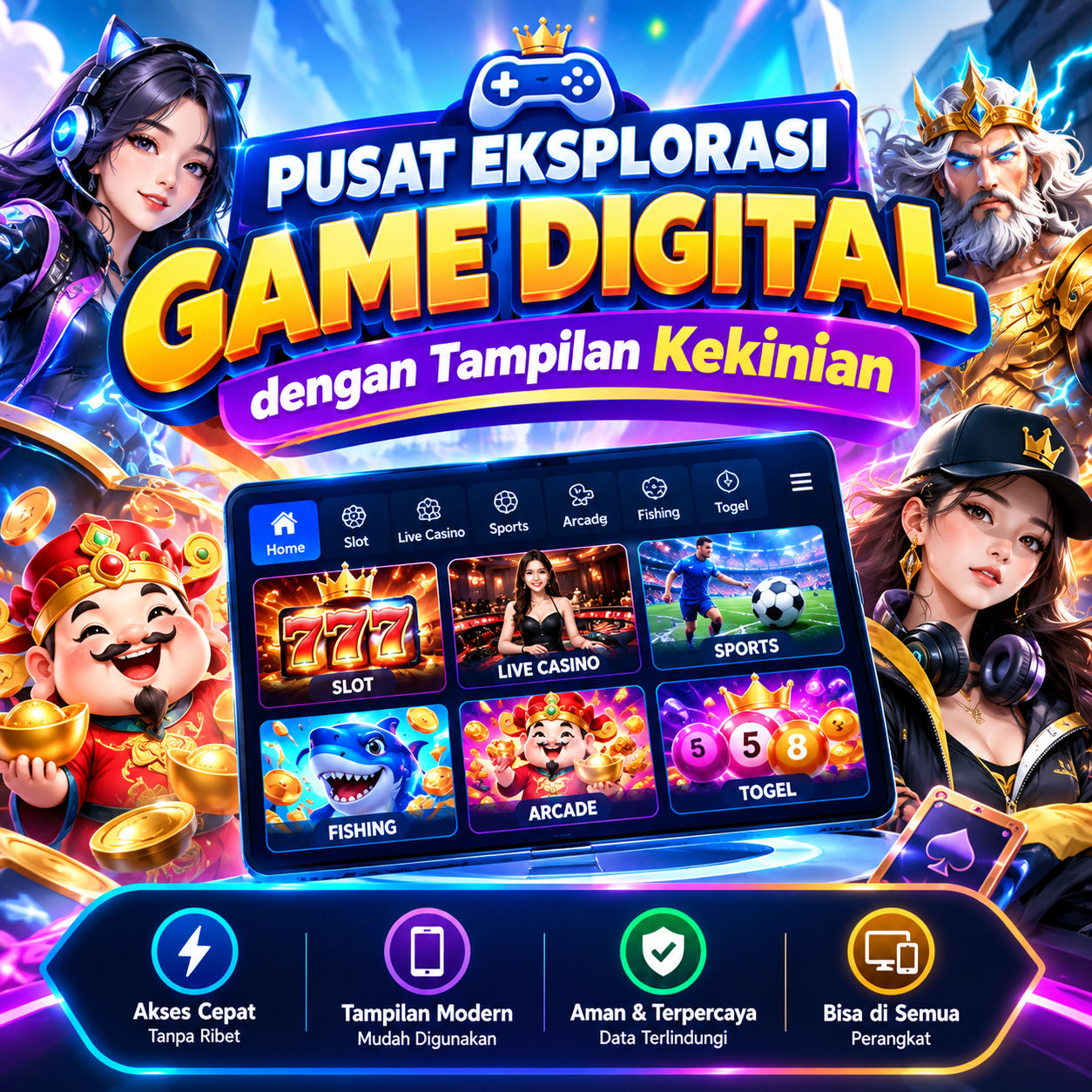
SURGAWIN: Pusat Eksplorasi Game Digital dengan Tampilan Kekinian
Kenali beragam hiburan digital di SURGA WIN melalui halaman yang tertata rapi dan mudah dinavigasi. Setiap kategori disusun agar proses menemukan permainan terasa lebih praktis.
Pertanyaan Seputar SURGAWIN
SURGAWIN menjadi pusat eksplorasi berbagai hiburan digital dengan kategori permainan yang disusun secara rapi dan mudah ditemukan.
Struktur halaman SURGA WIN dibuat terorganisir sehingga pengguna dapat berpindah kategori tanpa harus melewati tampilan yang rumit.
Ya, setiap kategori ditata secara terstruktur agar proses menemukan pilihan permainan terasa lebih praktis.
Tampilan modern membuat halaman terasa lebih menarik sekaligus membantu pengguna menikmati proses menjelajah dengan lebih nyaman.
Konsep SURGA WIN memang dirancang untuk memudahkan pengguna mengenali dan mengeksplorasi beragam kategori dalam satu tempat.
Perpaduan desain kekinian, halaman yang tertata, dan navigasi sederhana menjadi daya tarik utama SURGAWIN untuk aktivitas eksplorasi game digital.
Testimoni Member SURGAWIN
A
Ibot
Member sejak 2025
Tanggerang
SURGAWIN punya tampilan yang kelihatan fresh dan rapi, mencari kategori game yang ingin saya eksplorasi juga terasa lebih gampang.
R
Niko Jr
Member sejak 2024
Sibolga
Saya suka bagaimana SURGA WIN menyusun setiap kategori secara teratur, jadi tidak perlu muter-muter untuk menemukan pilihan yang dicari.
B
Geryang
Member sejak 2025
Tapanuli
Menurut saya desain SURGAWIN cukup kekinian tanpa terasa berlebihan, navigasinya tetap sederhana dan nyaman digunakan.
S
Bravy
Member sejak 2025
Bali
Hal paling menarik dari SURGA WIN adalah konsepnya yang praktis, berbagai pilihan hiburan digital bisa dijelajahi dari satu halaman.
A
Jot
Member sejak 2024
Kupang
Saya langsung merasa nyaman saat melihat tampilan SURGAWIN karena susunan informasinya jelas dan kategorinya mudah dikenali.
L
Tepe
Member sejak 2025
Lampung
SURGA WIN berhasil membuat aktivitas mencari dan mengenali berbagai permainan terasa lebih santai berkat desain modern serta navigasi yang tertata.


 Millions ofpremium assets
 Great
value subscription
Great
value subscription

 Promo
Promo
 Login
Login
 Daftar
 Link Alternatif
 Live Chat